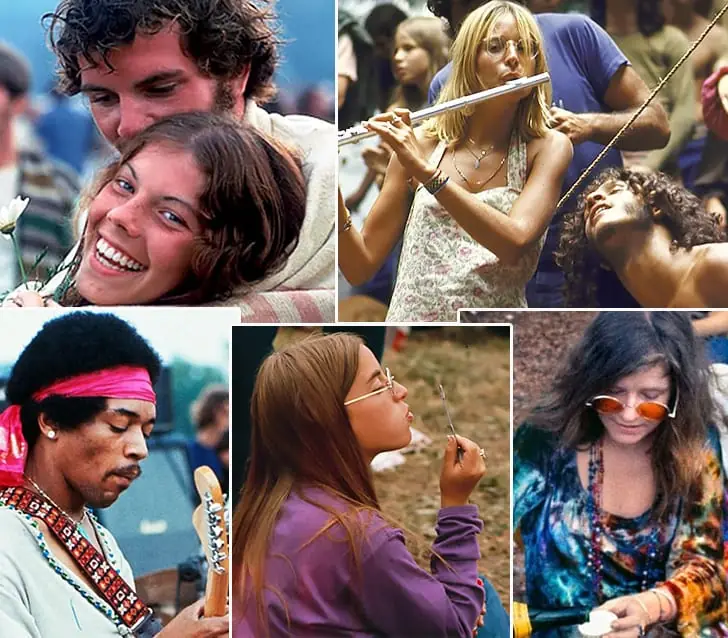
Woodstock started in 1969, on August 15th. More than half a million attendees came together on a simple farm, in a peaceful little town called Bethel, in New York. Those people were there for the three-day music festival.
The venue was announced as “An Aquarian Experience: Three Days of Peace and Music,” and it was just that. It was a huge success, but not without its hiccups, which probably went unnoticed by the people who just had fun. Here are some of the majestic photos of this probably largest-ever celebration of peace, love, and rock ‘n’ roll.
Not A Fashion Show
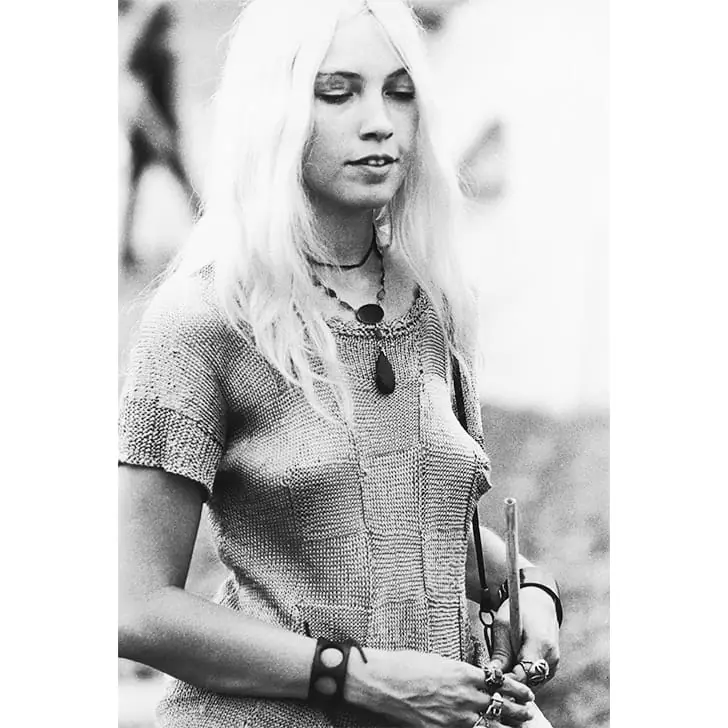
Woodstock ’69 was not a fashion show. It could perhaps be considered one of the largest events in recorded history where people wore exclusively what they felt good in. Can you imagine a public event of such proportions where there is no code for what to wear?
This, of course, led to many people being barely dressed or even unclothed. Anyone could wear whatever they wanted. And, this is the crucial part; they wouldn’t be judged or looked upon with even the slightest sign of disproval. That surely helped people feel free.
Going My Way?
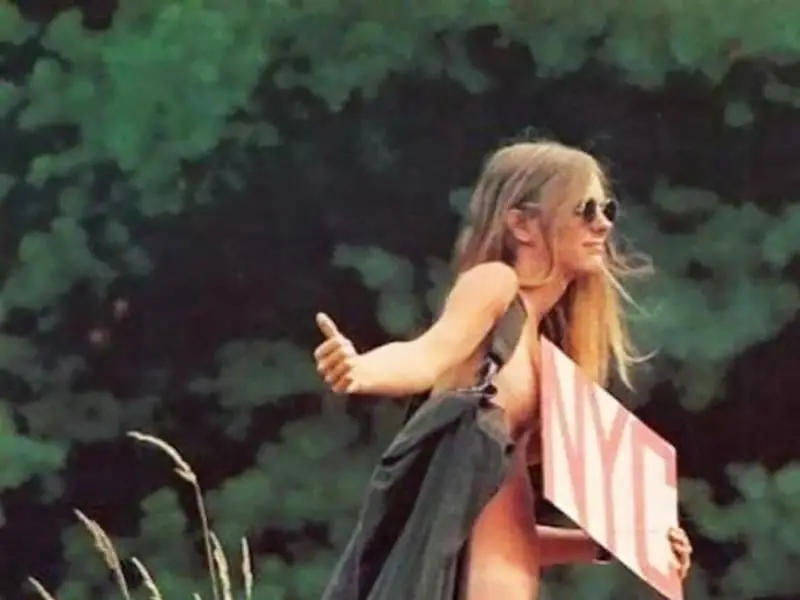
Speaking of being bare and feeling free, have you ever had that dream where you’re undressed in the middle of a school class? At the board, and everyone’s laughing… It may be a big presumption, but let’s say that if anyone who visited Woodstock that day had any similar fears, they were cured once and for all.
A popular conservative opinion about these sorts of things is not to condole or support it. No shock there. How did the people suddenly reach that state of mind so that they would all exhibit the same kind of behavior on those particular three days? There has to be more to it…
It’s About Love & Peace
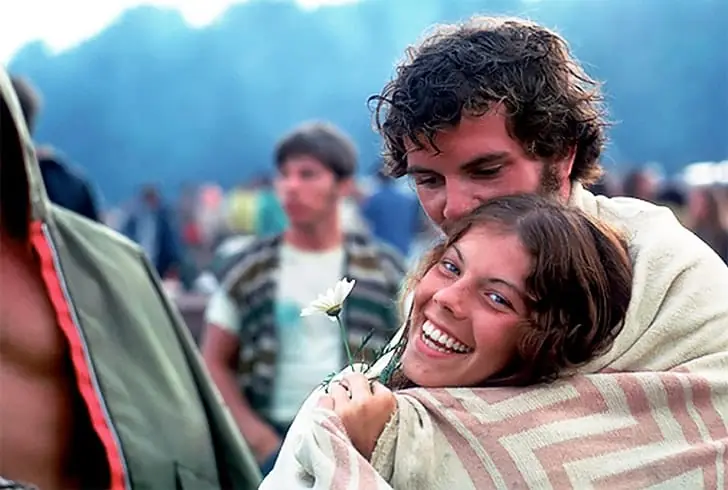
Woodstock ’69 was not about promiscuity and voyeurism, nor vulgarity and vice. Many people and photos of similar couples, such as this one, would tell you that. So, what was it about? Well, just watch movies like Hair (1979), Woodstock (1970), or even Easy Rider (1969).
But, if you were born in the present millennium, there is a slight chance you are not acquainted with the hippie subculture and what it stood and stands for to this day. Virtually everyone knows the main reason—it was a sign of protest against the Vietnam War and all wars, really. If you want a little more insight into that, watch Apocalypse Now (1979).
The Summer Of Love
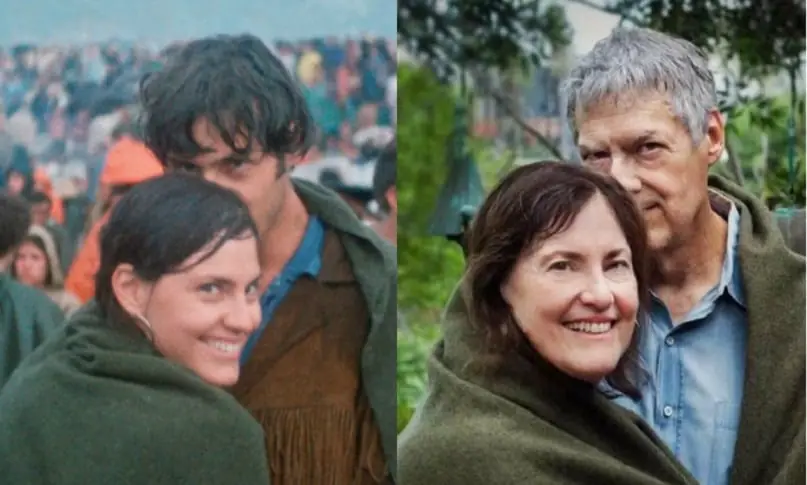
As proof of what Woodstock ’69 was about, this couple’s story went viral in 2019; their 50th anniversary together. Yup, they met at the festival, and the photo on the left is their first photo together. On the right, they reenact it 50 years later.
Meet Judy and Jerry Griffin. As the story goes, they met on the way there, and, according to them both, it was an instant connection. But, the couple didn’t take this photo with them, and they spent the next five decades looking for any recording, just telling the tale. In 2019, Judy watched a documentary about Woodstock, and she screamed when she saw herself and Jerry!
Dance Beats War
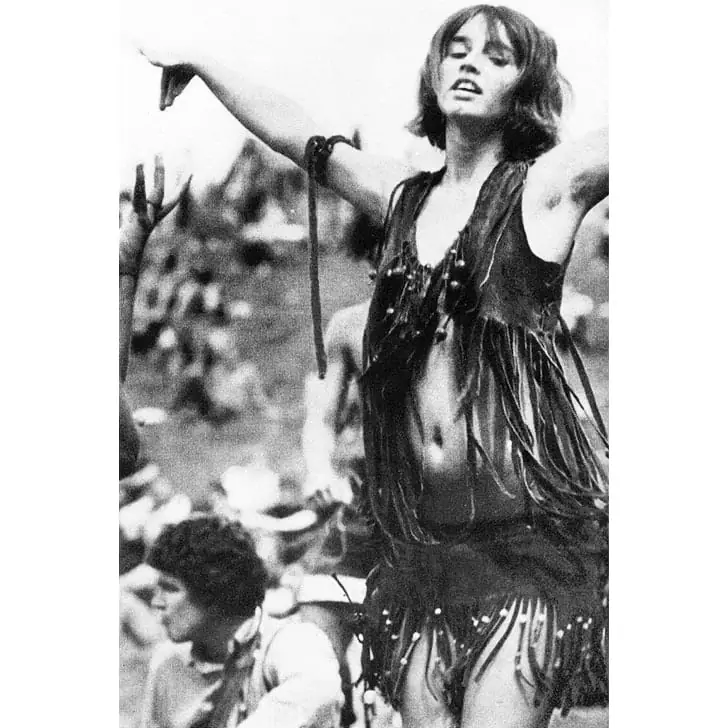
All ideals aside, Woodstock ’69 was a festival of dance and music! It was a three-day danceathon. There were 32 acts during those 72 hours. Actually, the festival did last well into the fourth day, but we’ll get to that later.
The program started on August 15, 05:07 p.m. The now-late Richie Havens opened the festival, and the bands all played for around 45 minutes each. The first day officially ended around 03:45 a.m. Over ten hours of dancing, not bad for the first day. But, that was just warming up, for things picked up the next day…
Sleep Whenever You Can, When You Can, & For As Long As You Can
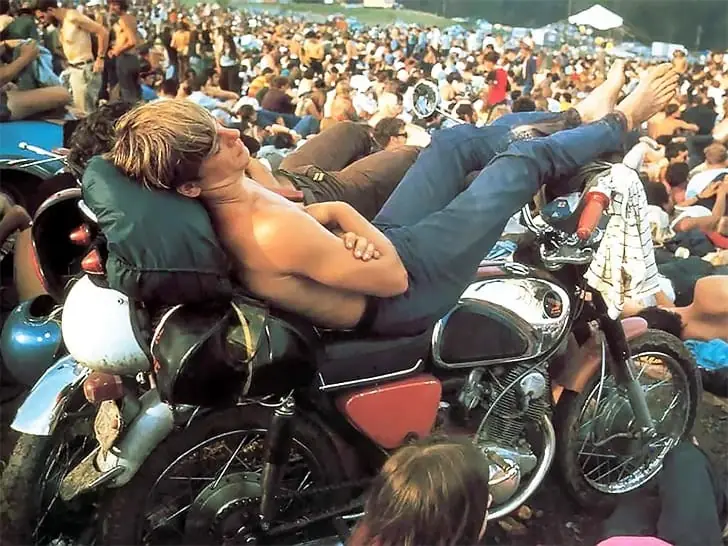
Since the program for the first day ended at around 4 a.m. and it was summertime, it was nearly dawn. However, the tempo was picking up, and the program for the second day was scheduled to begin a little earlier… In fact, a lot earlier.
Some of the more popular psychedelic rock headliners were up that day, so people needed to regenerate as much energy as they could. An English rock band named Quill was set to open the venue at noon, 12:15 p.m. to be exact. As you can see in the photo above, the policy was “to each his own.”
Half A Million People Sleeping On A Farm…
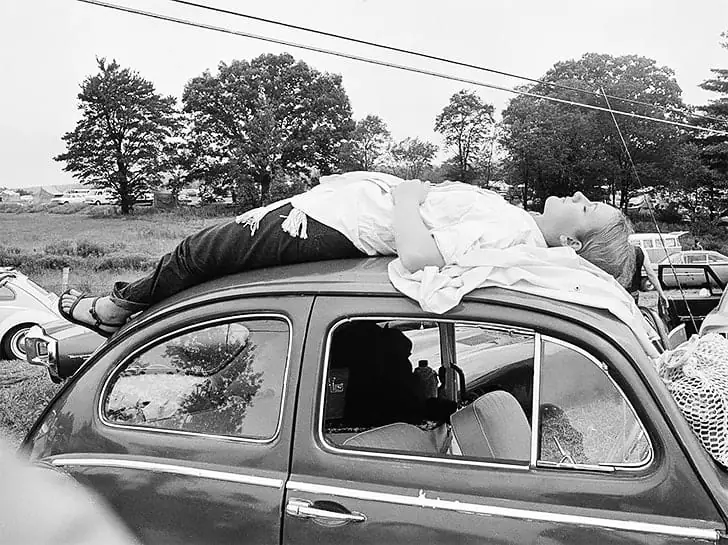
We don’t think this is something one can imagine without actually being there, but having half a million people on a dairy farm must really be something… This is over five-hundred-thousand people sleeping under the stars. Some of them used their cars, of course.
But, four people cannot sleep inside a single, averagely-sized, four-wheel vehicle. Accommodations had to be made. This girl in the photo clearly didn’t need to be told that. This was probably a good way to get some rest and get a tan at the same time. As far as the noise goes, well… after dancing for 11 hours the first day, you kind of get over that quickly.
Grateful Dead Warming Up For Day Two
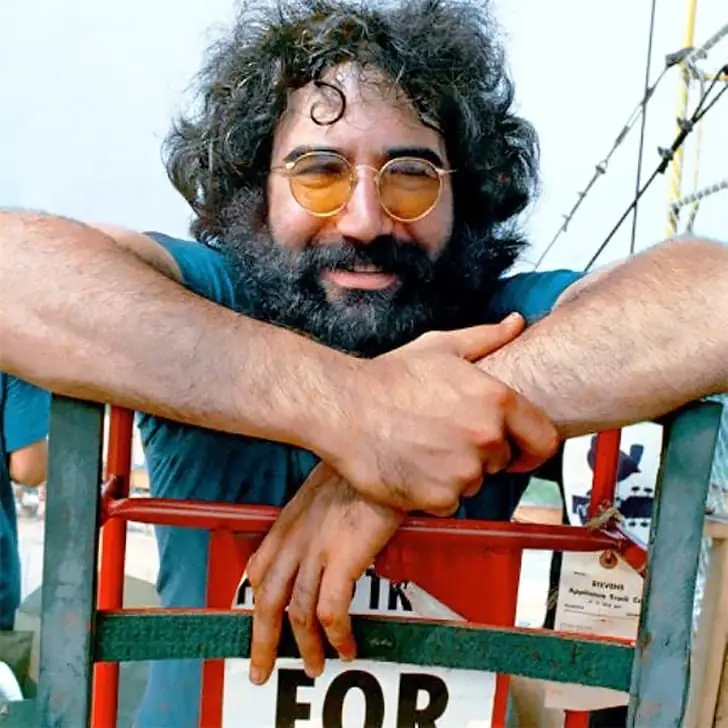
This happy gentleman in the photo above is the late Jerry Garcia, a legendary songwriter, singer, and guitarist. He was the founding member of the Grateful Dead band, which rocked from 1965 until 1995 when Garcia died.
In the photo above, Garcia just turned 27 at the beginning of August, and the Grateful Dead had just released their third album Aoxomoxoa. They also had a live album come out around the same time, which is at the beginning of 1969, titled Live/Dead. They were given the 10:30 p.m. to 12:05 a.m. prime time slot. Garcia later said that their performance was terrible because they were all “pretty smashed.”
Make Your Own Music
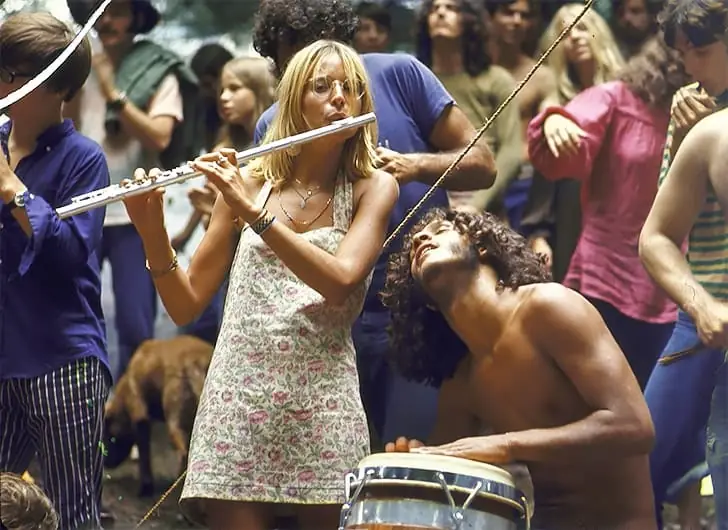
Of course, a lot of people didn’t just come there to wait for the bands. People were enjoying letting go, and a lot of them were in their creative element. Who knows how many wonderful tunes and songs may have been created during those three days and never recorded or repeated…
Woodstock ’69 was, in a lot of ways, the first time that many things people do today happened. Stuff like performance art, body art, making improvisational music live, probably with strangers… This was all new—remember, this was 1969. The Doors released their debut album only two years before this.
Free People Of All Ages – Unite!
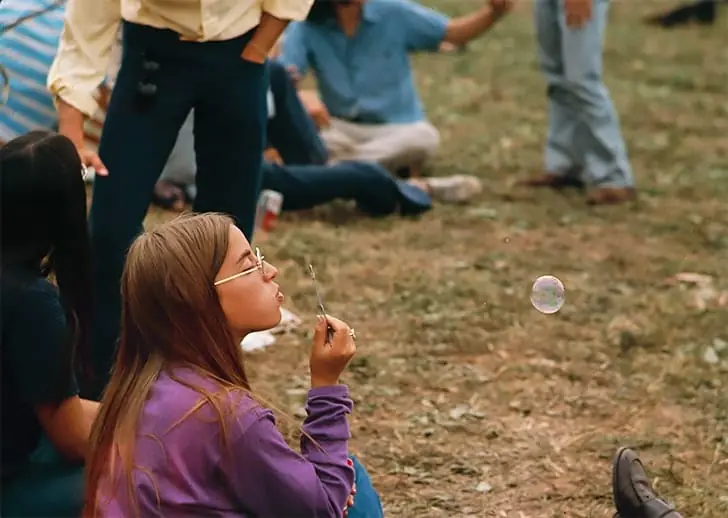
Woodstock was the turning point for many things, so it was the case with the audience’s age range. There was literally none. Whole families were there, people from all walks of life, all ages, all professions. All that mattered was that you wanted love and peace, not war and destruction.
Just a quick reminder, the Vietnam War was raging on in the interim. So, Woodstock was ultimately a form of nonviolent protest. The focus was on music, but the audience was greatly dominated by people who were openly against the war.
Day 2 – Janis Joplin And The Kozmic Blues Band
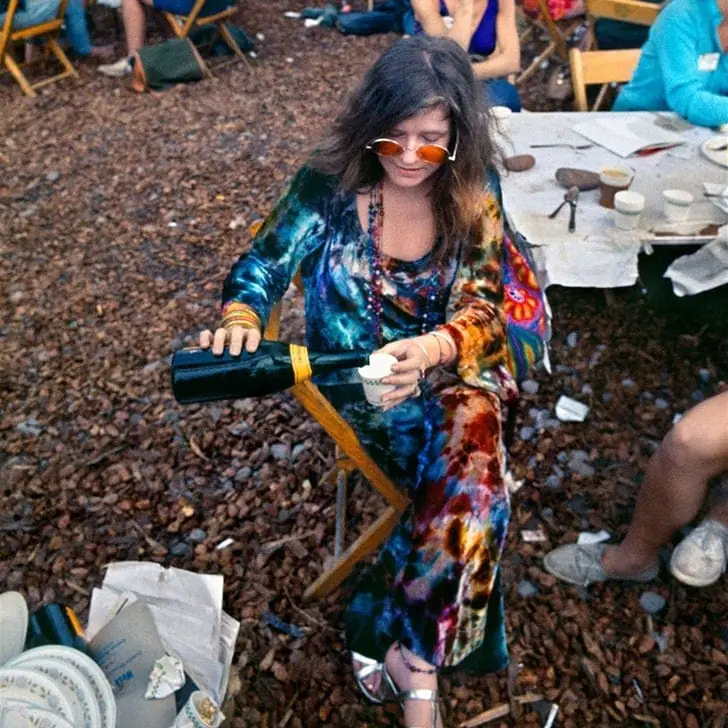
In the photo above, we see, of course, one of the all-time icons of rock and blues in the whole history of music. This is Janis Joplin, chilling and sipping on what looks like Champagne backstage on day two.
If you look at her iconic live performance at Woodstock 1969, of which various recordings exist, you’ll notice she wears this exact dress. It falls short compared to her singing that day, which was some of the best in her career. She performed with her backing group, Kozmic Blues Band, from 02:00 to 03:00 a.m.
A Tent Is Worth A Thousand Homes
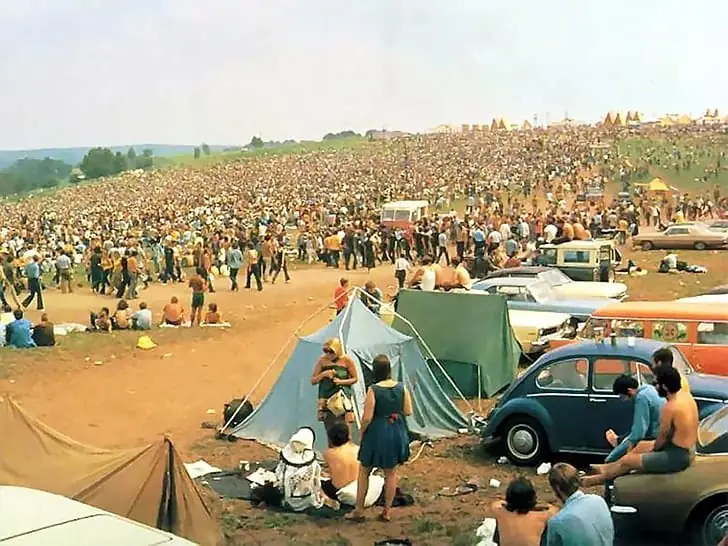
In a situation like this, it pays off to come prepared. Again, Woodstock ’69 is probably the first time camping at music festivals was seen in such a large capacity. Of course, there is no way to know for sure, and people had been camping long before that, but it’s an interesting thought.
Whoever remembered to bring a tent must have felt really smart when surrounded by hundreds of thousands of people just lying in the dirt, or on towels if they’re lucky. However, the real troubles began when it started raining. But day two was still mostly all sunshine and clear sky.
Rock ‘N’ Roll… &, Mud
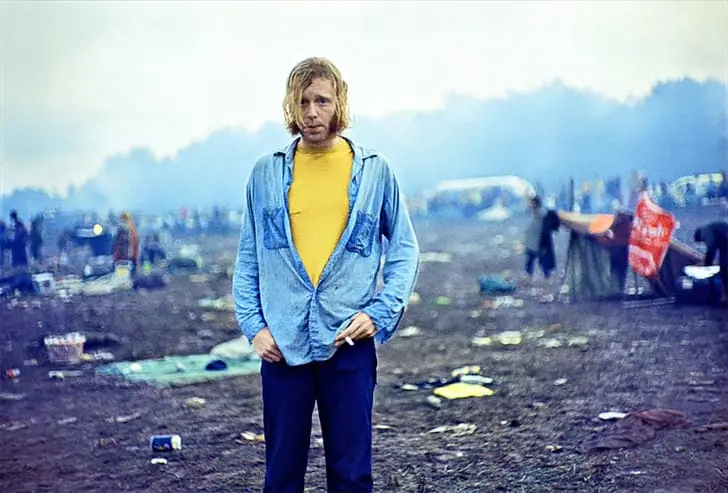
However, while the first two days had very little rain, it was raining before the festival, according to reports. So, the earth was wet, and what little rain did fall did not help. Now, if you’ve never been to an open festival, you may not understand why your friend who frequents them is often debating on wearing rain boots.
Half a million people trampling on wet ground, disposing of trash whichever way they could, was exactly as it sounds… Pretty rough. The photo above was reportedly taken the day after the festival, during the clean-up of the farm. Now, this is after the third day, which we will talk about more in a moment.
Woodstock ’69 Didn’t Happen In Woodstock
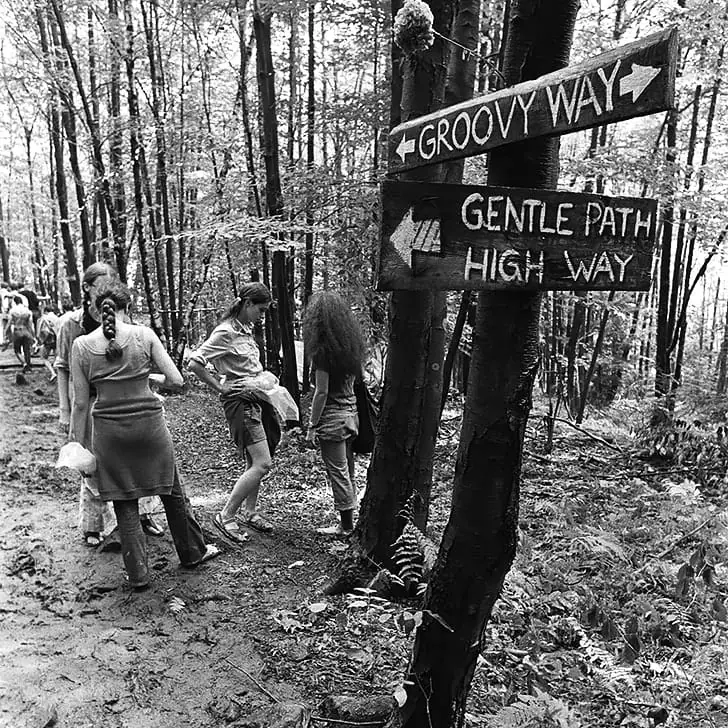
While we’re on the subject of the farm again, it is important to note that despite everyone calling this festival Woodstock, and that being its official designation, it actually happened in Bethel. As mentioned, it is a whole different town in the state of New York.
According to data, the festival was set to happen in Woodstock, a town in Ulster County, NY. But, the organizers relocated because they couldn’t find the right place. The next choice was Wallkill, but their permits were recalled a month before the event was scheduled, so they switched to Bethel.
Melanie Safka – Beautiful People
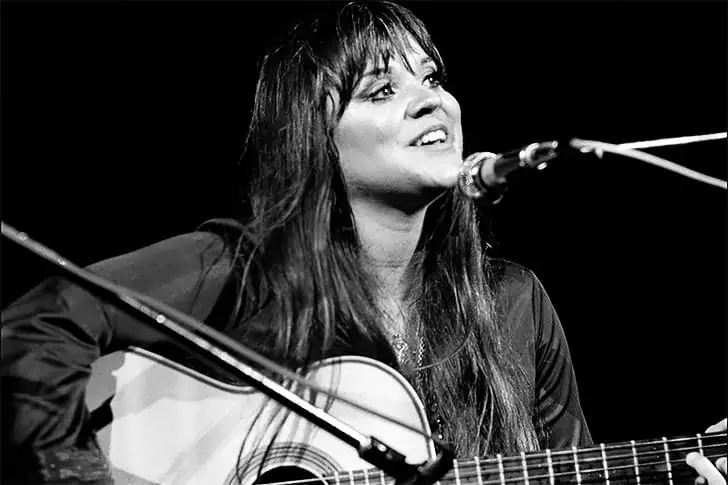
Before we get to day three, let’s fill in some details of the first two days. Melanie Safka, known as Melanie, began her career in 1967 but had already gained prominence by then performed on the first day. She is most famous for her hit song Brand New Key, but that was two years after the festival.
At Woodstock ’69, Melanie performed from 1:00 a.m. to 1:30 a.m. for a bit shorter than most performers, but enough to do some of her best songs, including Mr. Tambourine Man, Close to It All, Beautiful People, and others. Her most recent album came out in 2015, titled 1984.
Walk Barefeet To The Stars
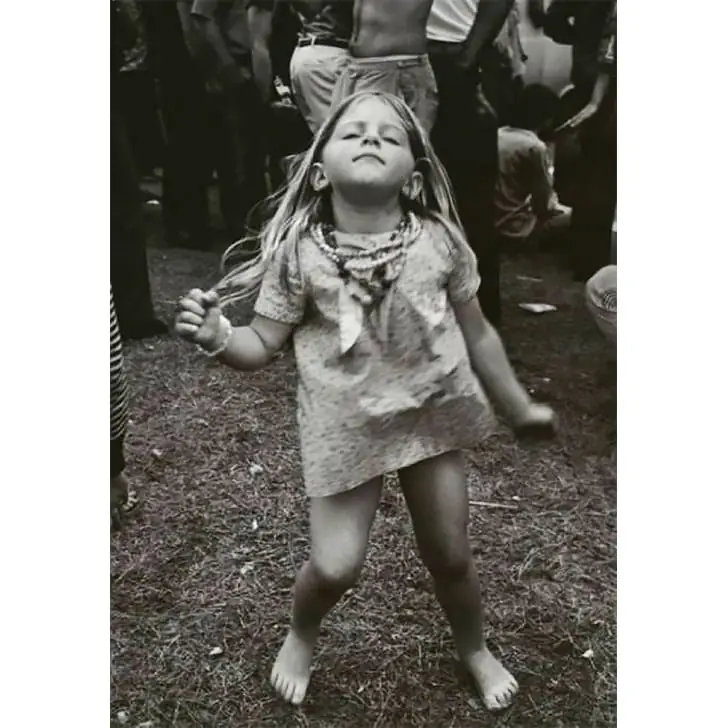
While mud was the downside of having such a large concert on a dairy farm, and with occasional rain, there were some upsides to it. The ground was mainly soft, enabling people to walk barefoot, which was consistent with the entire “Garden of Eden” vibe people were feeling.
Now, the farm belonged to Max Yasgur, according to online data. All the people there expected that the festival would happen again, at the same time the following year. But, Mr. Yasgur refused to rent out his property, and the town of Bethel put new laws into place that prohibited anything like that from ever happening again.
Woodstock ’69 Was Free
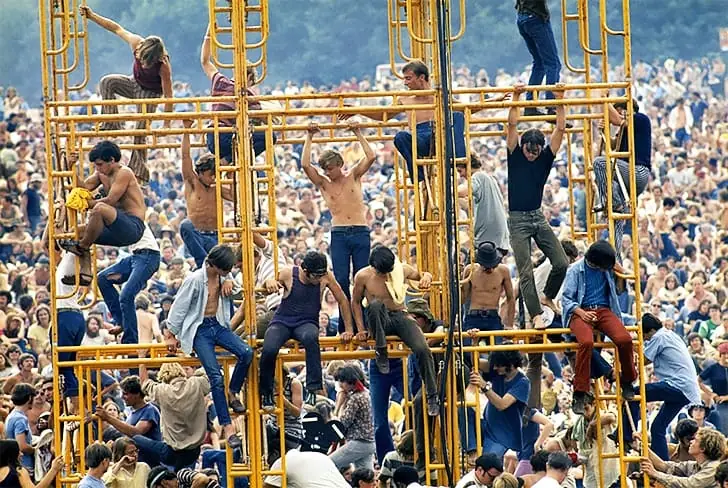
While the festival was scheduled to begin on Friday, August 15, people started pouring in on Wednesday. Two full days before the first performance would begin, around 50,000 people were camping in front of the stage. This was even before the fences were set up, which presented a problem for the organizers.
Since there was no way they could ask for the 50,000 people to leave, just so they could put up a fence and charge them to get back in, the organizers decided to change the festival to free entry. The word had spread quickly.
Nothing Could Get This Crowd Down
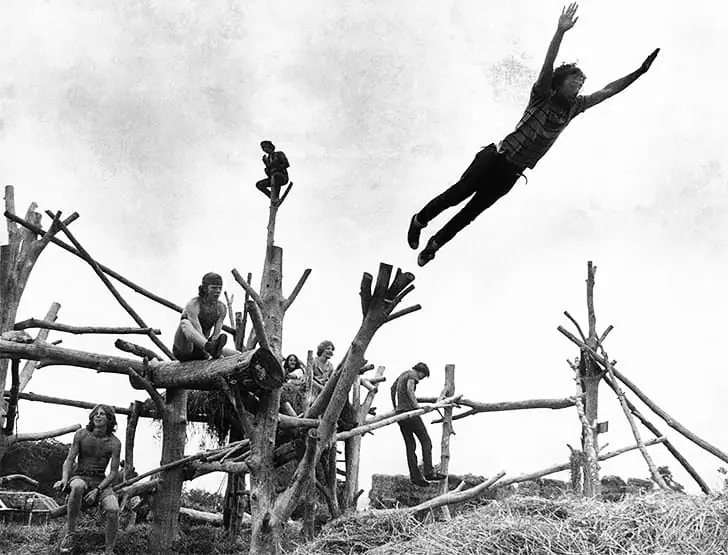
The official story goes that, after the news about Woodstock being free, people rushed in. But they were probably going to go anyway. Now, since there was a last-minute change in the location, this meant also that the organizers didn’t have time to prepare the field.
Constructing the stage, children’s playground, performers’ pavilion, and concession stands were barely finished on time, but the festival was seriously lacking accommodation for so many people. No problem, the people built their own accommodations! The crowd pulled together and made all sorts of improvised seating areas, shacks, tents, and so on.
Forecast For Day 3 – Anyone Need A Shower?
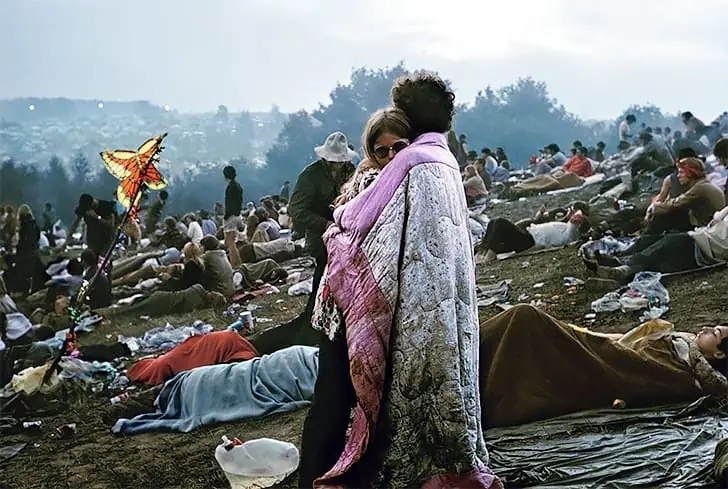
While Woodstock ’69 did go down in history as one of the most successful festivals ever, it could also very well go down as the one where nothing went according to plan. But, people, we’re managing somehow. They refused to leave or give up. There was love, joy, and warmth everywhere.
That is, for the first two days. That fateful day three was about to dawn on the crowd, and it was only good news for the crops. The first two days were good for the audience—no rain or very little. But, August 17 was different…
Ain’t No Sunshine But I’m Not Gone
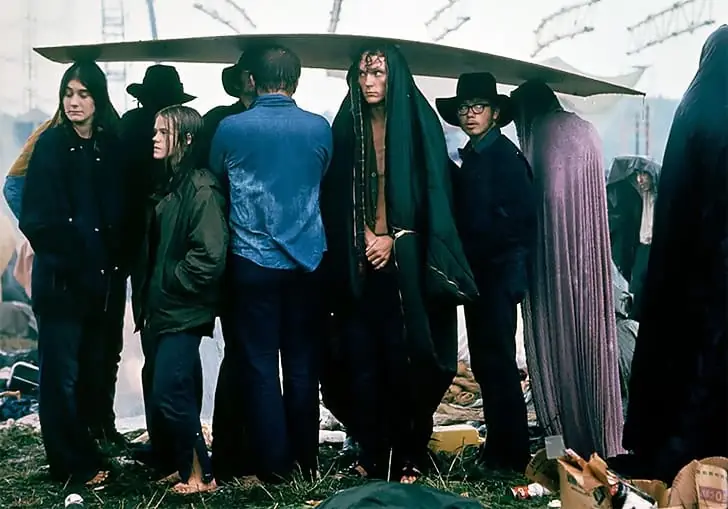
It was Sunday, August 17, 1969, when Mr. Yasgur’s farm became a swamp, for the lack of a better word. Thunderstorms and heavy rain soaked the earth and the people. Everything that everyone had was wet—clothes, towels, blankets, tents—everything. Nobody was privileged anymore; this was a great equilibrium.
And, what did the people do? What did half a million people on a farm, soaking wet, hours away from any hope of drying off? Well, they do what any sane music fan would do, they started clanging cans, clapping sticks, hands, or whatever they could, and yell, “woo woo oh woo woo!” Nobody was leaving; there were still artists to perform!
Nick & Bobbi
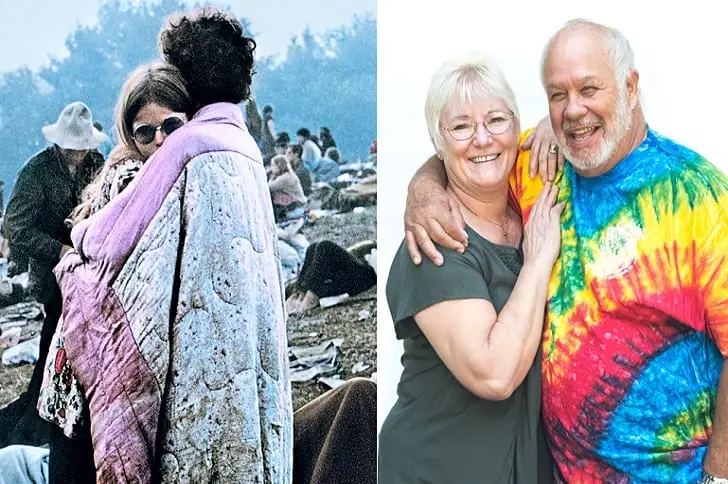
Talking about bonding, this is another couple that had spent those three days in each others’ embrace. This is Nick Ercoline and Bobbi Kelly, who started dating earlier that year. They celebrated their 50th anniversary together in 2019, and they have talked about their experience many times in interviews.
According to some sources, Nick and Bobbi didn’t recognize their photo until the festival’s 20th anniversary. Today, the two are Bethel Woods volunteers. The program focuses on preserving the historical significance of the sites over there as well as nature itself.
After The Rain Comes The Sun
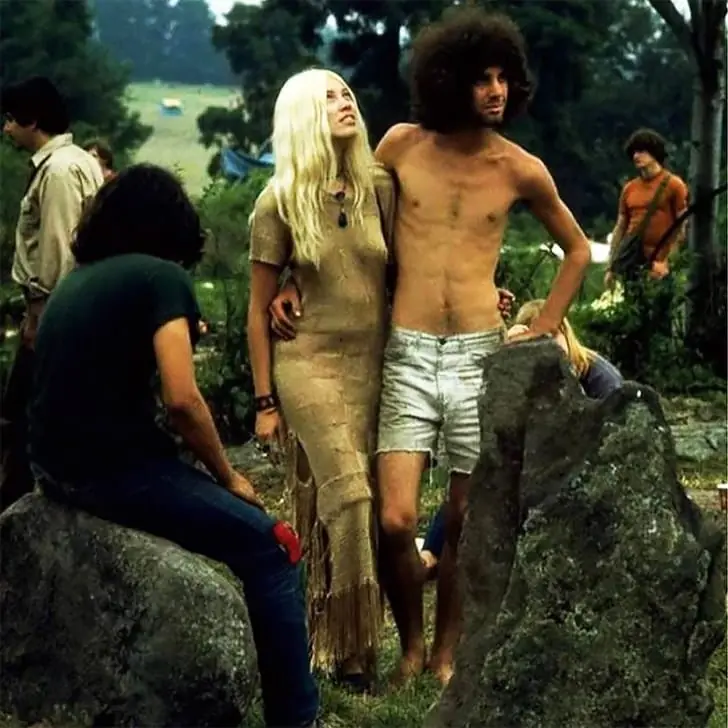
The weather reported for that fateful Sunday, August 17, 1969, was drizzle, showers, and low clouds. It turned south quickly, but some of the crowd endured. This caused the festival to spill over into the fourth day, Monday. According to sources, many people had left, leaving only a few there.
Joe Cocker was opening on Sunday, from 2:00 p.m. to 3:25 p.m., and the thunderstorm started right after. Next was Country Joe and the Fish, which started at 6:30 p.m. There was still one more night to go, and what a night it was…
Artist Recap So Far
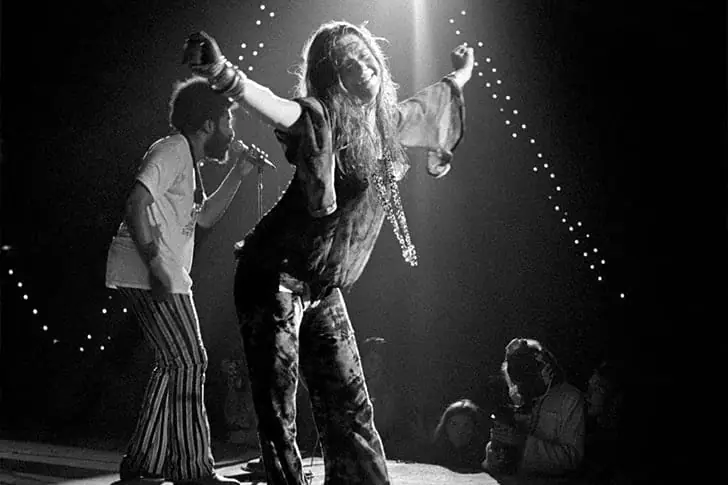
So, the final phase, let’s call it, of the Woodstock ’69 festival was about to begin after heavy rain, at 6:30 p.m. So far, we had the first day, with the likes of Swami Satchidananda, Richie Havens, Sweetwater, Tim Hardin, Melanie, Joan Baez, Bert Sommer, Ravi Shankar, and Arlo Guthrie.
The lineup for the second day included Quill, Country Joe McDonald, John Sebastian, The Incredible String Band, Canned Heat, Keef Hartley Band, Mountain, Creedence Clearwater Revival, Grateful Dead, Jefferson Airplane, Janis Joplin and the Kozmic Blues Band, The Who, and Sly & the Family Stone.
People Were Not About To Leave, Not Before They See Jimi Hendrix & Others!
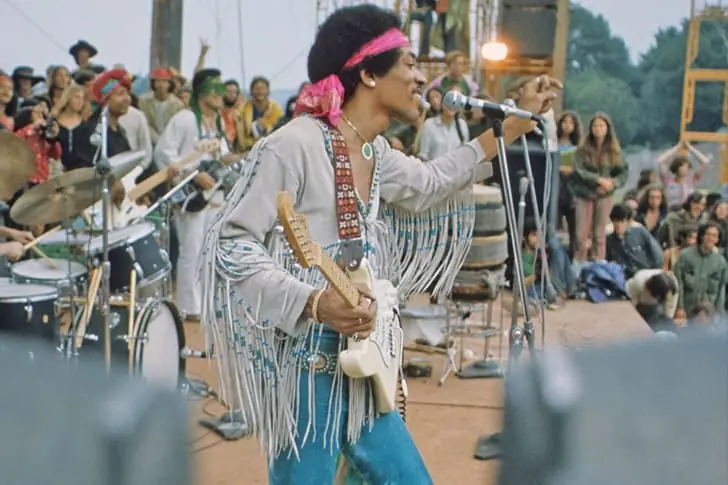
After Joe Cocker and the Grease Band played their set, nine more bands or artists remained. Now, there is no saying which day was better and which had bigger stars, for we’ve already had the likes of Janis Joplin, Jefferson Airplane, The Who, Joe Cocker, and the likes.
The remaining setlist for day three was made up of Sha Na Na, Country Joe and the Fish, The Band, Ten Years After, Blood, Sweat & Tears, Johnny Winter, Paul Butterfield Blues Band, Crosby, Stills, Nash & Young, and, last but not least, Jimi Hendrix.
A Little Info About Some Of The Artists
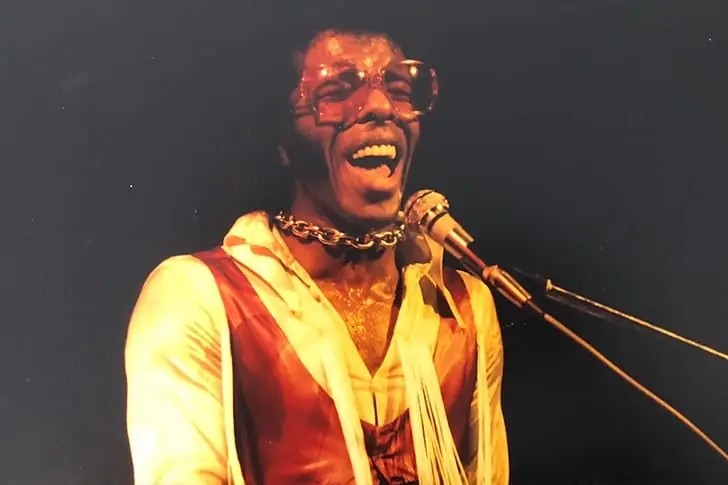
Sly & the Family Stone were performing on day two, from 3:30 a.m. to 4:20 a.m., so just before Sunday dawn. It’s a San Francisco band, active between 1966 and 1983. They are often credited for being pivotal in funk, rock, psychedelic, and soul music development.
In the photo above, we see Sly Stone, born Sylvester Steward in 1943. Sly was the band’s frontman and a multi-instrumentalist. At the festival, the band played such songs as Everyday People, Dance to the Music, Stand!, You Can Make It If You Try, and many more.
John Sebastian
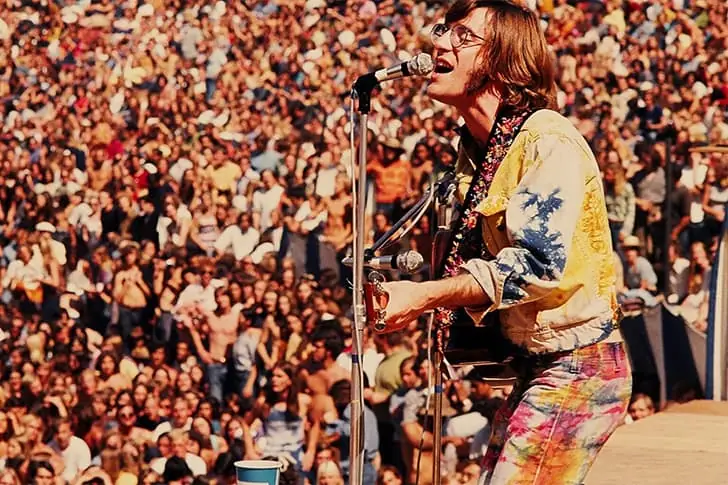
John Sebastian performed as a solo act, just him, his guitar, and a microphone. He played from 3:30 p.m. to 3:55 p.m. Just 25 minutes of acoustic bliss, but much-needed bliss, to be sure.
Sebastian played five songs: How Have You Been, Rainbows All Over Your Blues, I Had a Dream, Darlin’ Be Home Soon, and Younger Generation. Sebastian started his career in 1965 and is also famous for founding The Lovin’ Spoonful band. His song Welcome Back was a US number one hit in 1976, while inclusion into the Rock & Roll Hall of Fame came for his band in 2000.
Fire!
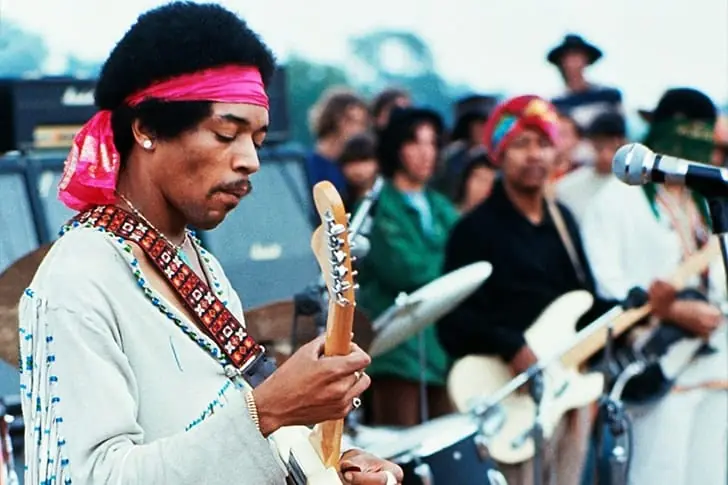
According to many historians and biographers of the great, late Jimi Hendrix, this performance was one of the best of his career. Hendrix was set to close the festival, and with all the delays from rain, his performance started around 9:00 a.m. That’s Monday morning, August 18th, 1969.
However, it was well worth the wait, and Hendrix played from 9:00 to 11:10 a.m., the longest performance of the festival—a real treat. All of the hits were there; Purple Haze, Hey Joe, and others, along with The Star-Spangled Banner. This was along with many improvisations, playing the guitar with his teeth, the usual Jimi Hendrix type of things.
Other Artists That Played That Last Day
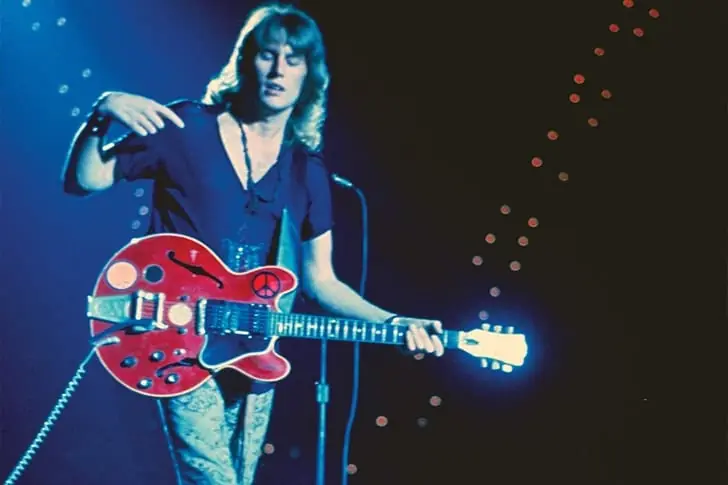
Ten Years After played from 8:15 p.m. to 9;15 p.m. They are a top-rated blues rock band from the UK, which peaked during the ’60s and the ’70s. In fact, they recorded eight albums from 1968 to 1973, and all of them were top 40 in the UK.
The guy in the photo above is the late Alvin Lee, the founder and one of the original members of the band. Lee lived from 1944 to 2013. Ten Years After broke up around 1975, but came together again later on and are still active. Their latest album came out in 2017, titled A Sting in the Tale.
The Late Joe Cocker
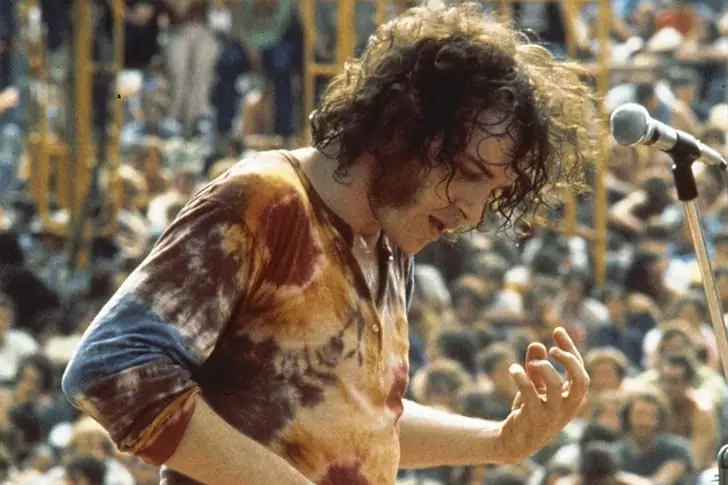
The late, great Joe Cocker opened the third day. While the audience was showered with rain immediately after his concert, Cocker’s performance was still a memorable one, according to attendees. He started at 2:00 p.m. and played until 3:25 p.m. in the hot sun.
Cocker played 13 songs, including his cover of the Beatles With a Little Help from My Friends. Other hits included Feelin’ Alright, Just Like a Woman, Let’s Go Get Stoned, and more… Cocker lived from 1944 to 2014, and the last album he recorded was Fire It Up, in 2012.
The Best Music Festival Ever?
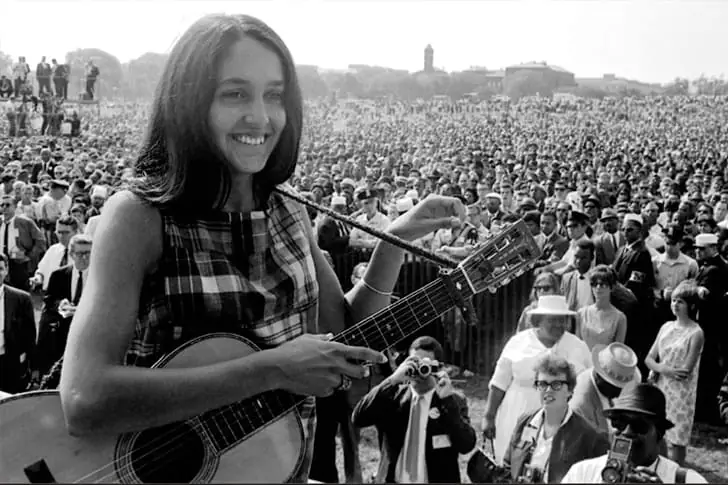
Just think of the names of the performers there. The lady in the photo above is Joan Baez, who began her career in 1960. She has performed to this day, recording more than 30 albums and many songs in six other languages besides English.
She played 13 songs at Woodstock ’69, all within a 45-minute window from 3:00 to 3:35 a.m. on the first day. Other names like Jimi Hendrix, Jefferson Airplane, Janis Joplin… This was the place to be. A year later, in 1970, an Oscar-winning three-hour documentary titled Woodstock came out. Highly recommended for all who want to invoke the experience!