The Deer King
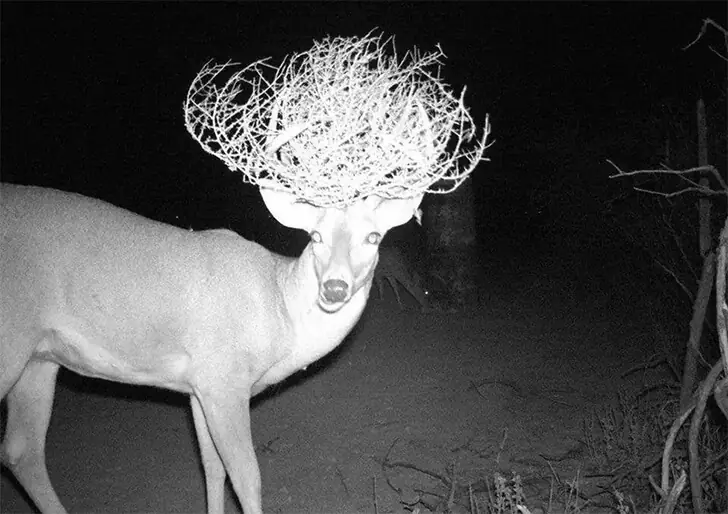
We’re grateful for motion sensor cameras that allow us a glimpse into the secret life of wildlife. From this picture, it seems deers are also learning to be fashionable to keep up with the trends. After this young deer got tumbleweed stuck on its antlers, it looked like it was crowned king of the deers.
Many plant species can have a tumbleweed as part of their structure above the soil. A mature tumbleweed will usually detach from the plant and fly away because of wind force, but the antlers could have simply picked it up accidentally. We only hope this fashion-forward deer is not uncomfortable.
Killer Bear On The Loose!
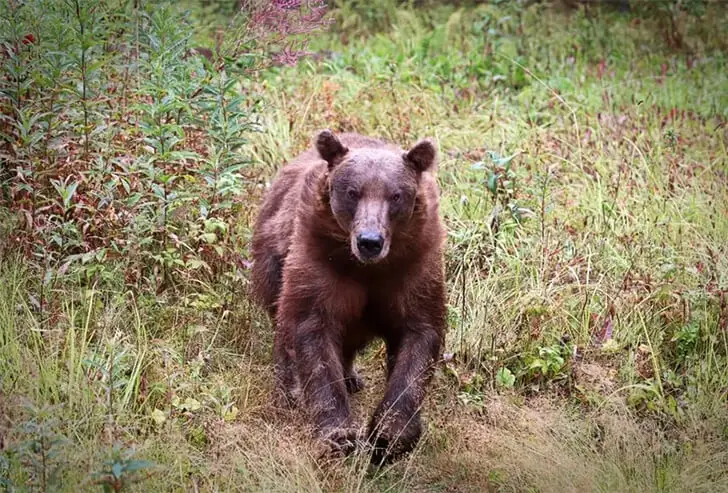
Is it just us, or is this bear looking straight at the photographer? It’s hard to believe that a giant predator like this would be running toward someone, and they stay calm, still taking pictures. Although bears have other food sources, some, such as polar bears and grizzly bears, are inclined to hunt and eat humans.
Granted, fatal bear attacks are uncommon, but that is not a risk we’d be willing to take. Most people seem to have forgotten Kesagake, the man-eating bear that terrorized a local population in Japan for five days after just waking from hibernation in 1915.
Deer Sorority Sisters
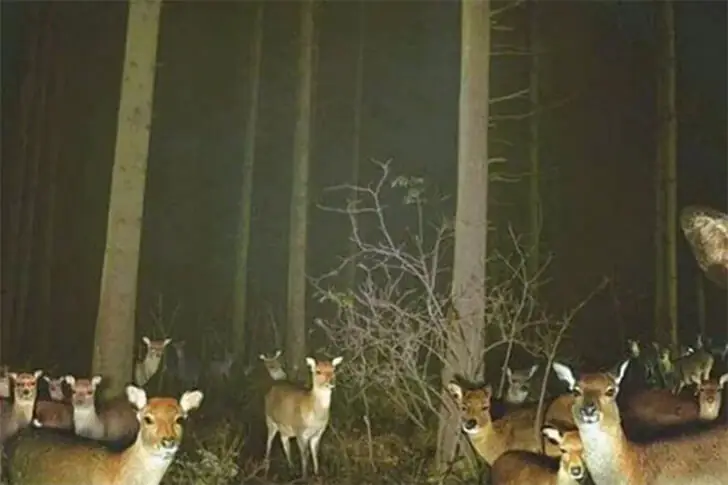
They say we’re stronger as a group than as individuals, and the deer seem to hold fast to that belief. Seeing them in their numbers here looks almost as scary as bumping into a cult group in the middle of the woods. But it’s not uncommon to see them gathered together like this.
Being very social animals, deer travel in groups called herds. Sometimes, males and females travel together, but other times, they travel separately. Most females have no antlers, and it’s clear from this picture that this is a female herd. Deer stay together to avoid predators and for companionship.
Sea Otter With The Munchies
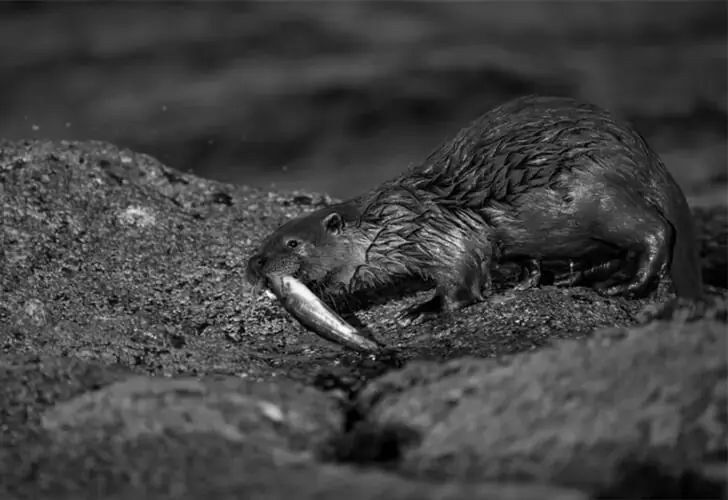
There’s no judgment here regarding how enthusiastic this sea otter seems about eating a fish. Despite being among the smallest marine mammals, sea otters are still quite dangerous and aggressive when they need to be. At least this one is just eating a fish. Wait till you see it hunt snakes to supplement its diet!
Interestingly, the chairman of the International Union for Conservation of Nature’s Otter Specialist Group claims that marine mammals are friendly even though they keep their distance from humans. After news that one victim of an otter attack received almost 200 stitches, we’re happy they stay away.
Owl Finishing Move
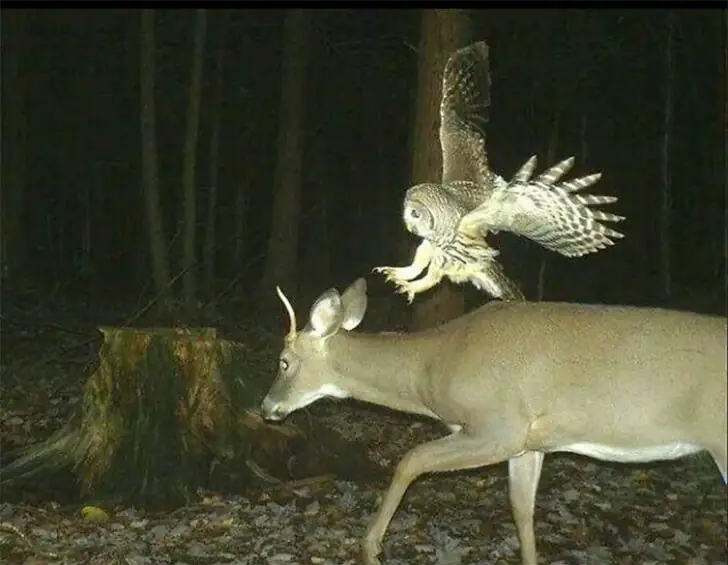
This perfectly timed picture is unreal, yet we can’t deny its authenticity. Ordinarily, it is unlikely that owls would attack deer, as they are generally too large for them to take down. Owls typically prey on smaller animals such as rodents, birds, and insects. But some larger owl species, such as the great horned owl, can take down small mammals like raccoons and skunks.
Many experts disagree with the idea that owls are hostile birds. But their most aggressive behaviors are displayed when protecting their young ones or defending their territory. Perhaps this deer was trespassing and received the classic dive-bombing owl welcome.
Mid-Air Battles
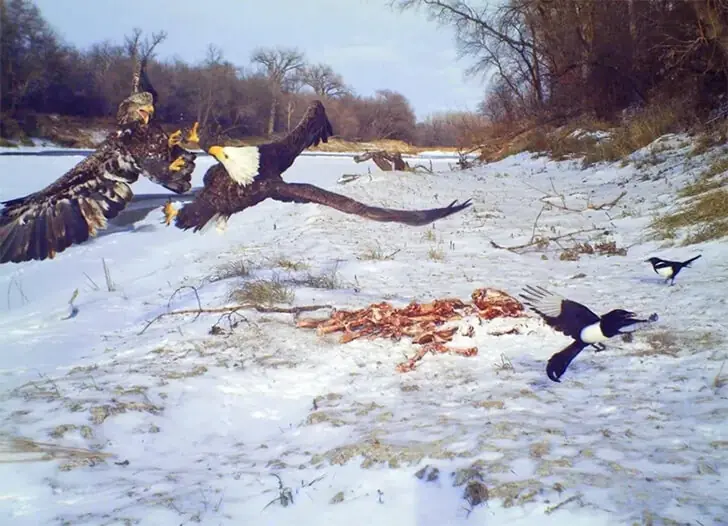
It’s not every day one gets to see a bald eagle, much less two. But it looks like they could be on better terms. The powerful birds have taken their bickering to another level. And knowing this species’ strong territorial instinct, the eagles are fighting to protect their breeding territory or nestling.
Their fights can be intense and fatal. But it takes a series of disregarded warnings to get them riled up enough for a fierce battle mid-air. At first, an eagle will give a high-pitched scream to indicate it’s their territory. Then the eagle will circle above the intruding bird until it leaves.
Flying Squirrel Sneak Attack
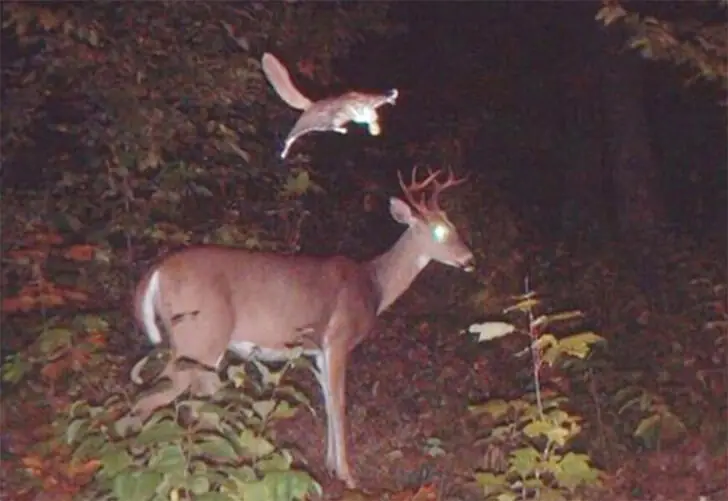
There’s absolutely no way this squirrel thinks it can take down a buck, even with a sneak attack. So what was it really trying to do here? It’s possible it mistook the deer antlers for a tree branch it could jump on. But not many people know that rodents like squirrels love eating antlers because of their nutrients.
Deers usually shed their antlers when they don’t need them during the winter. These antlers are an excellent find for rodents when foraging. But it seems this squirrel can’t wait for the deer to shed its antlers naturally. We can imagine that it didn’t end well.
Raccoon Photobombed by Deer
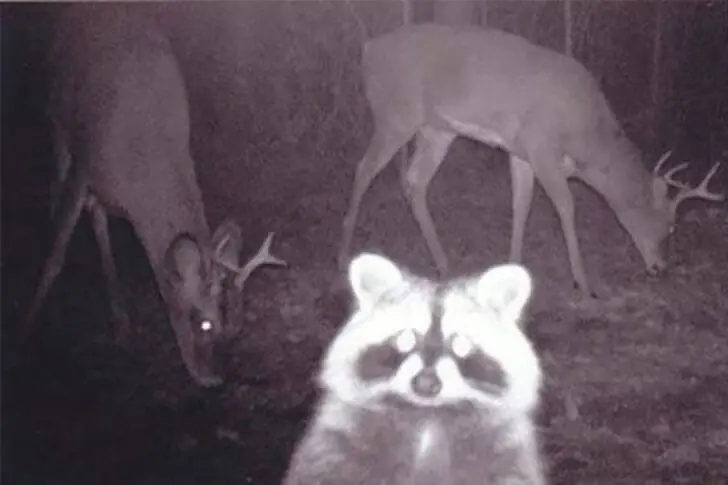
While this looks like a harmless selfie of a raccoon photobombed by two deer, there is a rather dark side to the relationship between these two animals. Raccoons are typically smaller animals that eat fruits, nuts, and other smaller animals. But they are very opportunistic and won’t pass up eating a defenseless young deer.
Trash pandas can actually be very aggressive toward deer, causing stress even for the mature bucks. It can get so bad that the deer cannot correctly grow antlers because their growth requires energy, and most of their energy would have been used up stressing over the raccoons.
Raccoon And Fox Standoff
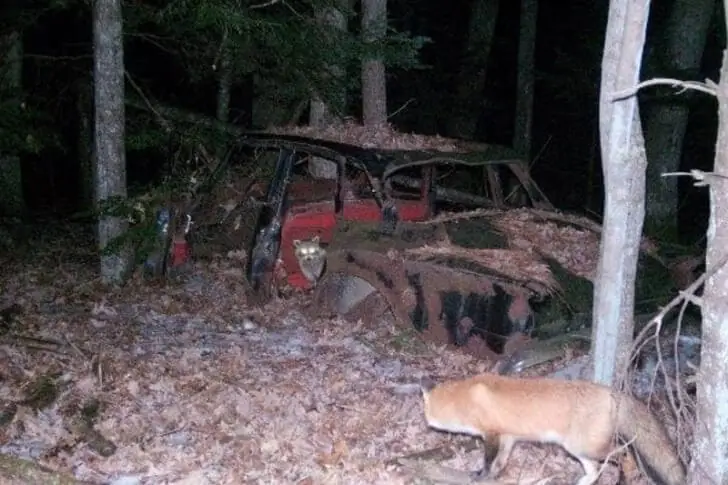
This showdown between the raccoon and the fox looks pretty intense. It’s not every day an abandoned vehicle is found in the woods, and these two are about to battle it out the old-fashioned way to determine ownership. Raccoons may be similar in size and aggression to foxes in certain situations, but they are not skilled hunters of larger prey.
A fox would have the skill to stalk and circle a trash panda before attacking at an opportune moment. So we don’t see the raccoon winning this battle. If only it were allowed to call dibs because, clearly, it found the vehicle first!
Raccoon Party
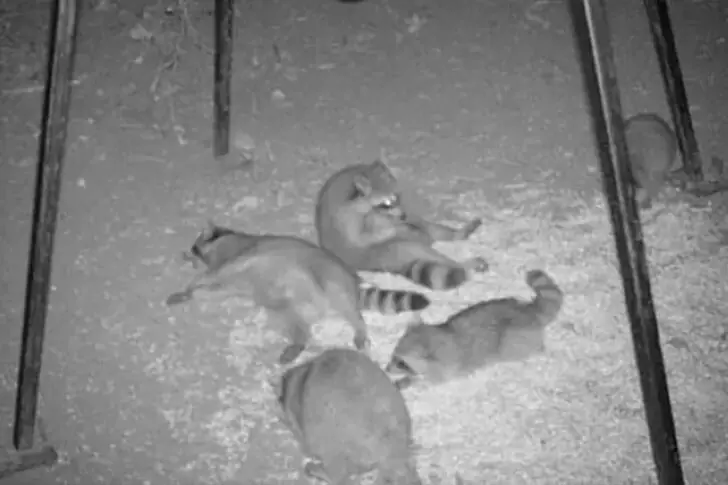
Once we see a bunch of trash pandas in the same place, we immediately assume they’re getting up to some shenanigans. It’s because raccoons are generally solitary animals who do not typically stay together in groups. Even if they may share territory, they usually live alone and mainly come together during the breeding season.
Female raccoons looking to have father figures for their young after breeding would more easily pass through a needle’s eye before that happens. After breeding, the males leave, and the mothers are left to care for the young raccoons alone for the first few months of their lives.
Motherly Love
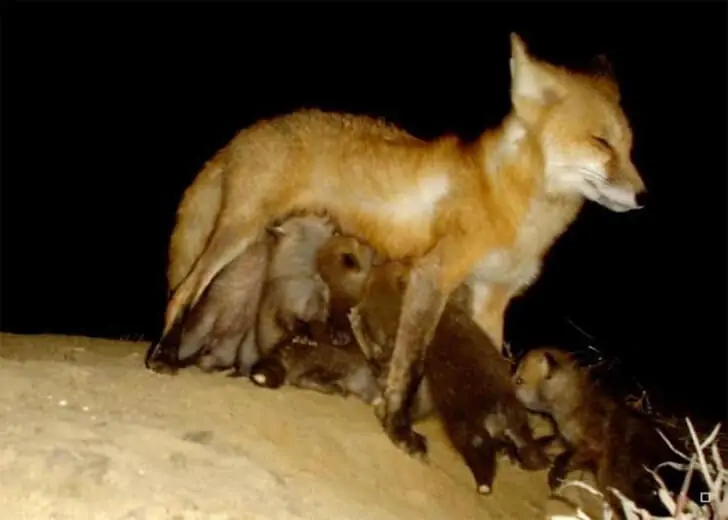
Foxes have a pretty striking resemblance to domesticated dogs because they are members of the same animal family. Even the cubs of this fox in the photo are as cute as puppies. Because these cubs are born blind, deaf, and incapable of regulating their own temperature for the first two weeks, their mother is always by their side.
Foxes usually give birth to about four or five cubs at once, but it’s not uncommon for some to have more than six. After seven months to one year, the cubs can leave their mother and start their lives on their own.
Uber Buffalo
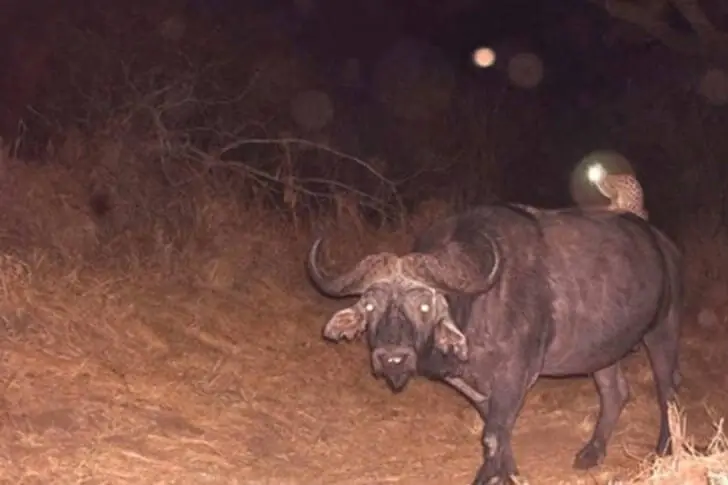
With the cost of gas on the rise, going back to riding large animals may be the next best cost-effective means of transportation. While it’ll look like that’s an original idea, we actually just stole it from this brilliant cat-like animal in our photo. But what inspired the feline to hitch a ride on a buffalo?
These cat-like creatures, known as genets, are all over Africa, but some are found in Europe and the middle east. Because of their size, they are hunted by larger carnivores and climb trees to escape. However, they seem to have discovered an alternative escape method of riding larger animals.
Coyote Deer Standoff
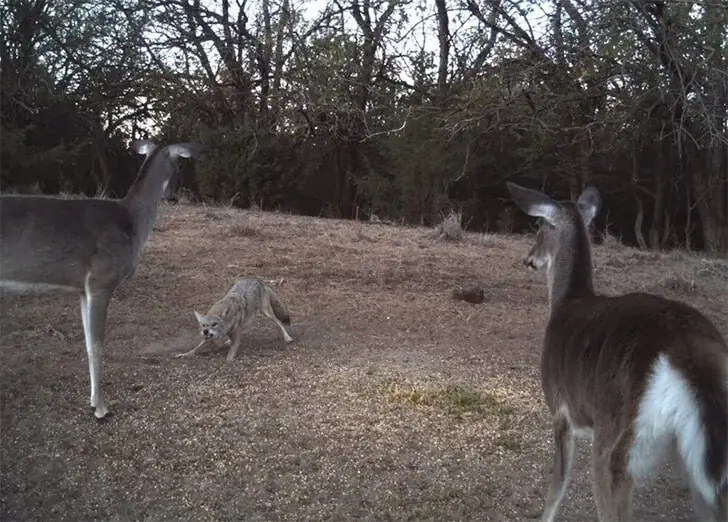
The wild is an unsafe environment where animals must either defend themselves or flee to stay alive. This photograph depicts a hostile coyote, ready to attack two deer. The deer, however, as seen at this moment, appear unshaken by the coyote’s presence and observe it rather curiously before deciding their next move.
Even though coyotes are known to prey on deer, they mostly attack fawns. They prefer to hunt smaller animals like rabbits and rodents, and it’s only the largest coyotes that can consistently prey on adult deer. This small one in the picture doesn’t scare them, especially considering it’s also outnumbered.
Camera Pecker
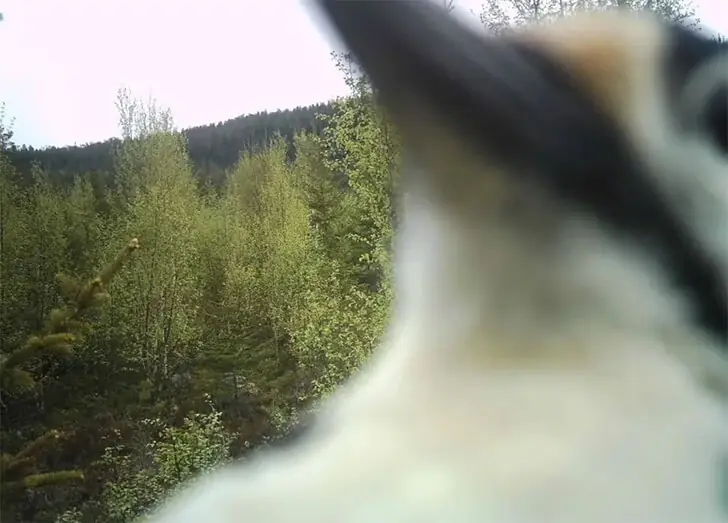
We’ve been wondering how these motion-sensing devices don’t get destroyed by the animals that notice them. Such a scenario like this is reasonably expected. This picture is the last one that the trail camera took before the owner found his device broken. The culprit was this woodpecker who didn’t stick to pecking only wood.
But before looking for the bird to cover repair costs, it may not have destroyed it deliberately. Woodpeckers are known for pecking on wood, but they do so because that’s the home of most insects. Perhaps it noticed insects on the device and tried to help itself to a snack.
Unusual Tiger Stripes
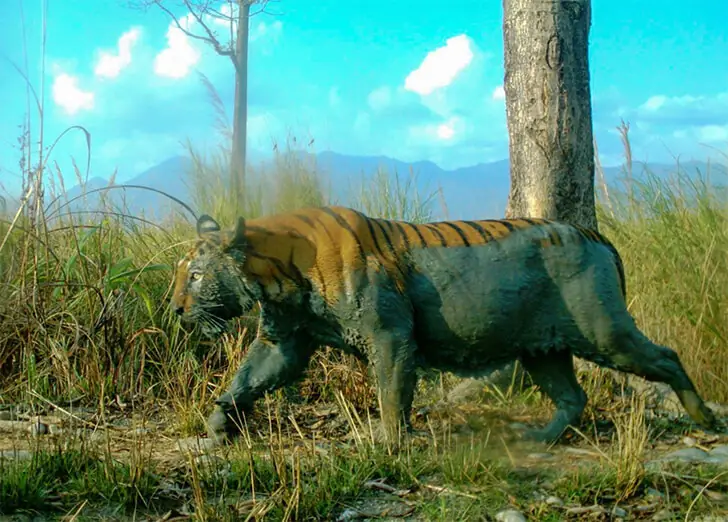
This is different from the usual color we are used to seeing on tigers. The big cat in our photo has that appearance because it has soaked itself in mud. Like many mammals, tigers soak in mud to cool down and protect their skin from the sun. The mud also helps protect their fur from parasites, but trust the predator to find a sinister advantage.
Apparently, rolling in mud can help tigers camouflage their scent, making it easier for them to stalk their prey. That may primarily be why they do it because they could also choose to cool themselves with water.
Trash Panda Atop A Wild Hog
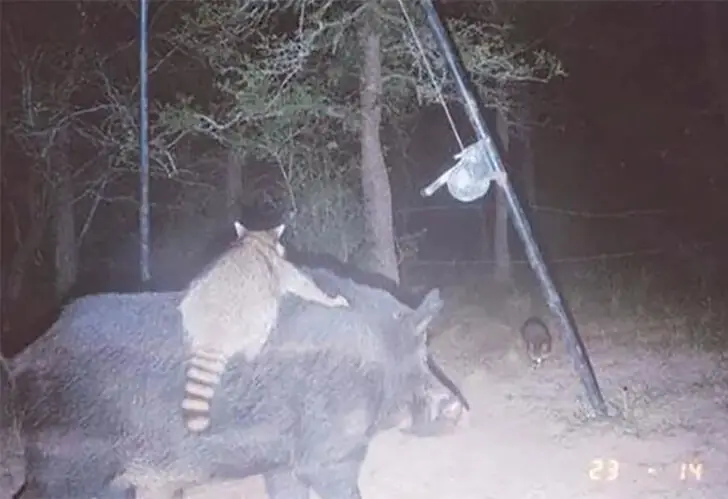
First, we saw a wild cat hitching a ride on a buffalo, and now a raccoon is riding a feral hog. Did we miss out on the transportation revolution that happened in the wild, or is this more likely a startup business spearheaded by larger animals? It might be a lucrative investment. We only hope the raccoon at least paid the correct fare.
Raccoons stay away from their natural predators, which are usually larger carnivorous animals like coyotes. If they come in contact with them, they can become aggressive. But since wild boars eat primarily plants and insects, raccoons have nothing to fear.
Deer Family Dinner
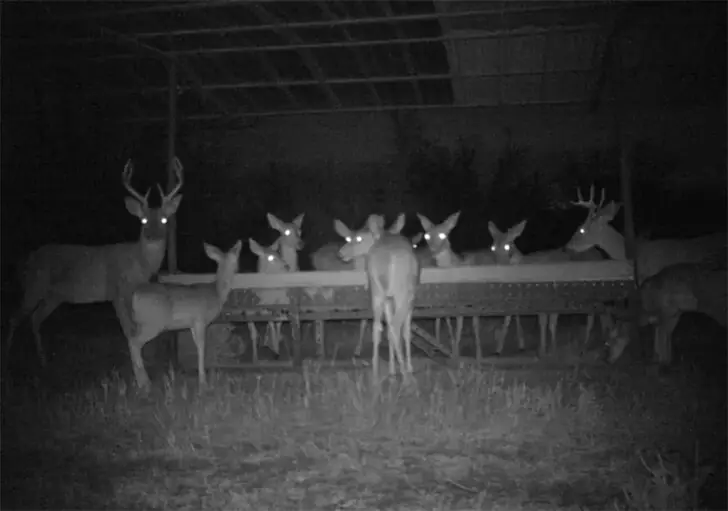
We never knew deer gathered together at dining tables to have meals as a family. That’s a very human thing to do. But deer are very social and can hardly ever be found without a herd. They communicate fear, anger, boredom, and excitement with each other, so it shouldn’t be strange that they mimic some human behavior.
But of course, we doubt they need a table to eat leaves and other plants. They were just captured in an exciting scenario. The herd must have noticed the motion sensor device judging from the one deer staring right in its direction. Deer have great vision and can detect the slightest movement.
Battle for the Feeder
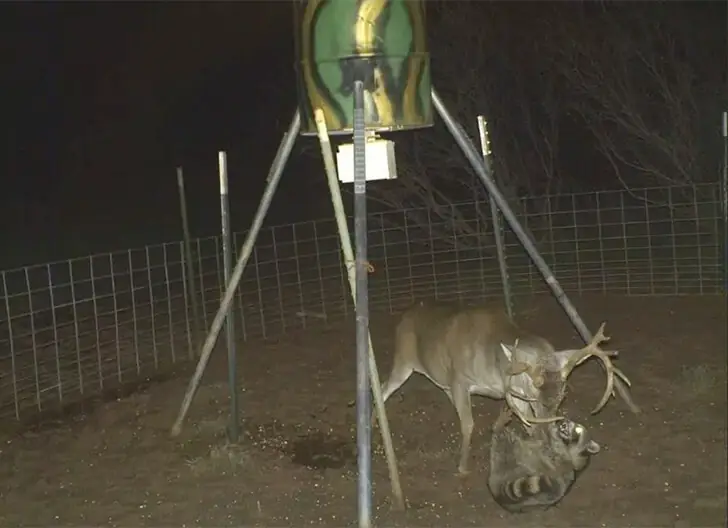
The image depicts a raccoon and deer struggling beneath an automatic feeder. Although the outcome is uncertain, the deer appears to have the upper hand with the raccoon pinned to the ground. Still, they are not mortal enemies. The only reason they’re fighting is because of food.
Raccoons eat many of the same foods as Bambis, including corn, blackberries, and persimmons. And they usually try to eat them at the same time the deer is eating them, which must have led to this fight. According to Growing Deer TV, many trail images of raccoons show them challenging deer at food sources.
Avoid Clowns in the Wild!
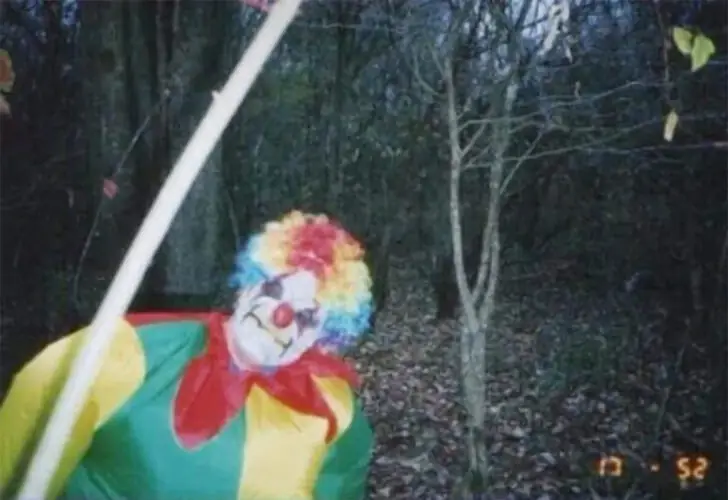
This trail device picture leaves us with so many questions, most of which are centered around why there is a clown in the forest. While we won’t get the answers we are looking for, the one thing we are sure of is that people do bizarre things in America.
In 2016, Rolling Stone published an article about supposed killer clowns that were spotted lurking in the woods from South Carolina to New York City. Some people reported hearing them talk in the woods, while some kids claimed the clowns tried luring them with money. That sounds pretty unsafe, so it’s best to avoid clowns in the wild!
Bunny Stew
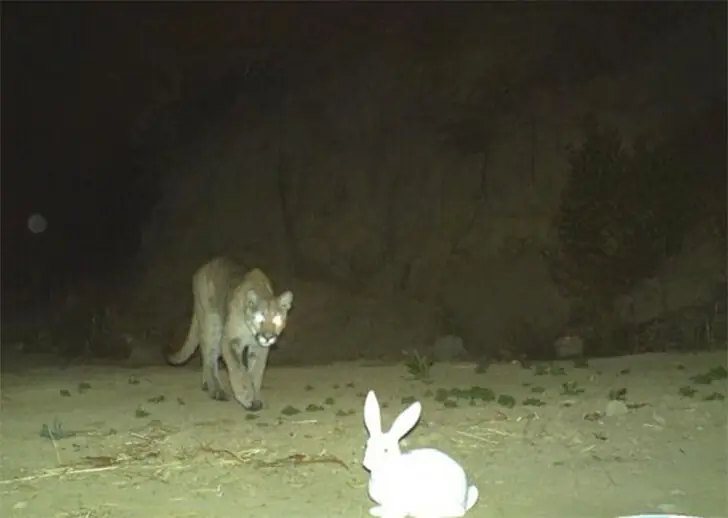
If it’s not already obvious, this rabbit’s life has ended. It’s unfortunate because the feline would ordinarily not bother taking such an insignificant life. Usually, predators prefer eating more giant animals, but they can also settle for fish, rodents, and rabbits or hares when larger prey is scarce.
However, rabbits are known for their agility and speed, which allows them to escape quickly from predators such as canines. Since they can also hide in small spaces and caves, they have a good chance of escaping if they notice a potential attack on time. But looking at this picture, it’s already too late.
A Wild Romance
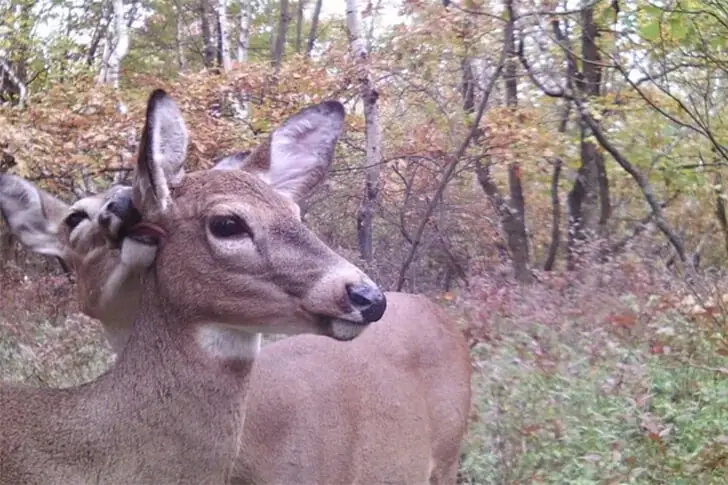
We’ve talked quite a lot about the social nature of deer, and this picture depicts another one of their social behaviors. It’s normal for them to lick one another around the neck and shoulders as a form of social bonding and communication. That act is called grooming, and it may begin with a dominant deer.
There’s much to love about grooming between deer, not just because of the intimate nature of the act. By licking one another, one also ensure they stay clean and remove dirt and external parasite from their bodies. That’s killing much more than two birds with one stone.
A Feathery Conflict
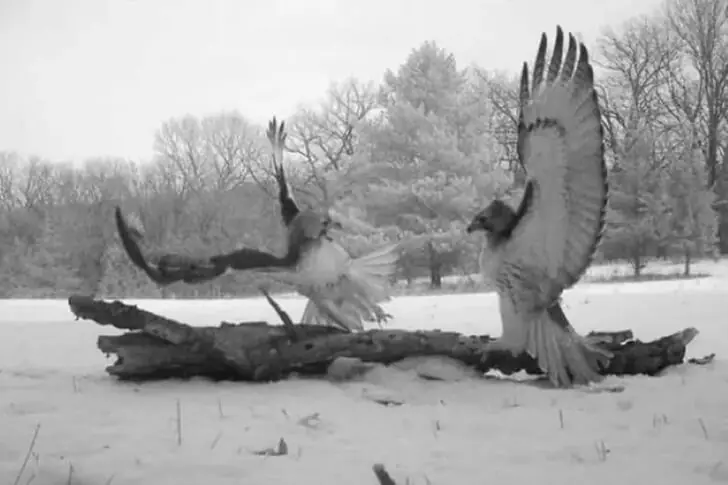
Here’s another mid-air battle between two birds of prey. And as usual, we can’t be sure what led to their altercation. Most times, the fights are about territory because eagles are very territorial. But even the courtship and mating rituals between the male and female eagles are like a fight. Who can say for sure which it is this time?
Eagles mate for life and engage in elaborate courtship rituals. These rituals typically include aerial displays like swooping and diving and food exchange between the male and female. Once a pair has formed a bond, they will build a nest together and take turns incubating the eggs.
Evolved Fisher
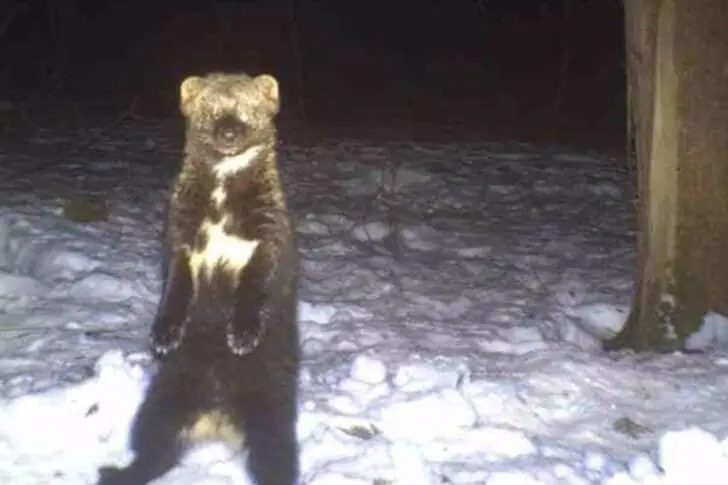
One great thing about these trail motion sensors is how they can capture the most unexpected things in the wild. Here, for example, it has spotted what looks like a fisher on its two hind legs. Fishers ordinarily walk on all four legs, although their hind legs are longer and more robust. The strength of their hind legs allows them to jump and sprint.
The fisher is a small carnivorous mammal found in North America, known for its dark fur and bushy tail. They are solitary but skilled hunters that prey on smaller mammals. And they are particularly famous for their porcupine-hunting abilities.
Fierce Giant Moose
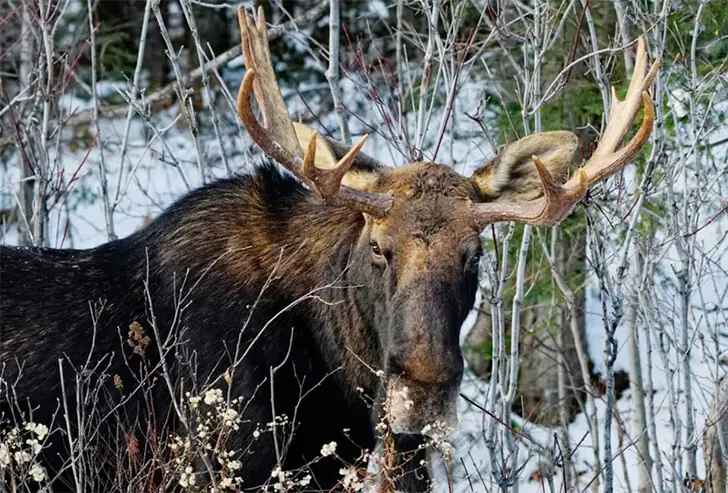
Doesn’t it seem like the moose in our photo is looking too intently at us? It’s like the beady eyes our parents give us to let us know they’re furious without saying a word. This male moose was pictured during winter at Algonquin Park in Canada looking quite furious, but moose are generally not aggressive.
A moose may become aggressive if hungry, tired, or harassed by people. And the animals are pretty nervous, so they get easily rattled if a person approaches them too closely. Well, we get it. We’d be furious, too, if someone were invading our personal space.
It’s Raining Food!
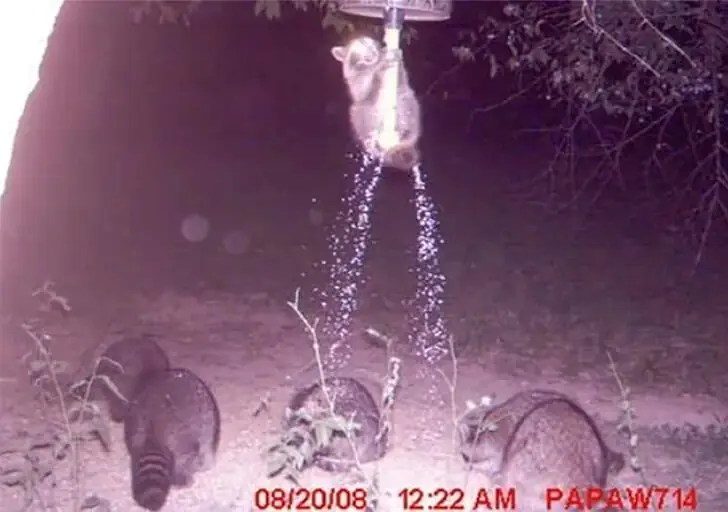
Raccoons can be mischievous, but they are resilient and highly adaptable animals. They can thrive in a wide variety of environments and can quickly learn to solve problems. This picture perfectly summarises all we’ve said about them. The Humane Society recommends hanging bird feeders high to prevent trash pandas from reaching them, but these intelligent ones have found a way around that.
Despite being solitary animals, raccoons may work together in certain situations, such as foraging for food. So in this situation, they organized themselves in a pyramid to get one high enough to reach the food. We could learn a thing or two from them about resourcefulness.
Deer Got Moves
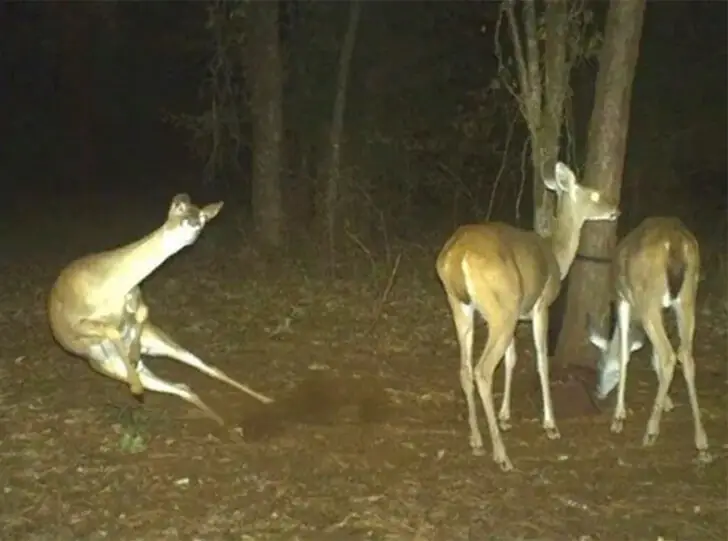
The other deer ignored the strange one as if they had seen this happen before. But there’s nothing ordinary about it, right? The photo captured the deer at a hilarious angle, and it looks more like it had a miscalculated step leading to its fall. However, there could be more to it.
Despite the appearance of these animals’ legs, they can move quickly and gracefully through most terrain. They have strong legs and hooves that allow them to navigate through forests and other natural environments. Still, deer may stumble if injured or tired or if the terrain is uneven and difficult to navigate.
Return of the Flying Squirrel
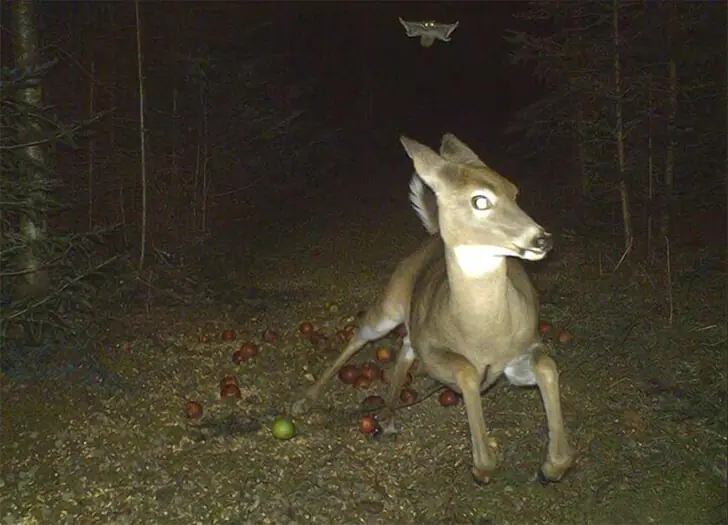
Flying squirrels are a group capable of gliding through the air. They are most active at night, and this one seems to be coming straight for the deer, who’s running for its life. We doubt the deer realizes it’s much bigger than the flying rodent and that the chase should be the other way around.
But deer are timid animals after centuries of predation. Because of their highly developed smell and hearing, they have a heightened awareness. That makes them react nervously even to smaller animals they believe to be potential threats. But can we blame them when we’d react even worse to a flying cockroach?
Close-Up of a Cheetah
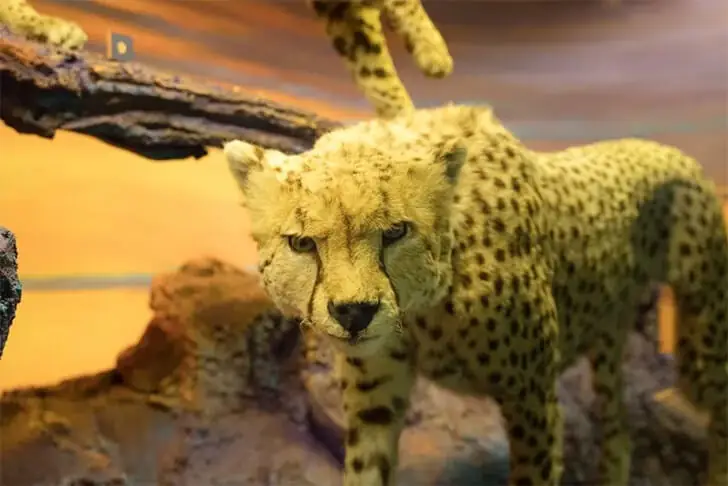
No one wants to have a wild cheetah staring so intently at them. These big cats are apex predators with non-retractable claws. Not to mention there’s no outrunning them since they are the fastest land animals. Thankfully though, the feline in our picture is actually just an exhibition in Geneva’s Museum of Natural History, also called the Dead Animal Museum.
Several rooms in the tourist attraction are filled with stuffed animals and birds, and they look so lifelike that visitors could mistake them for real at first glance. Cheetahs are considered a vulnerable species, so it’s nice to have a sculpture to remember them by in case they go extinct.
Spiky Boxing Championship
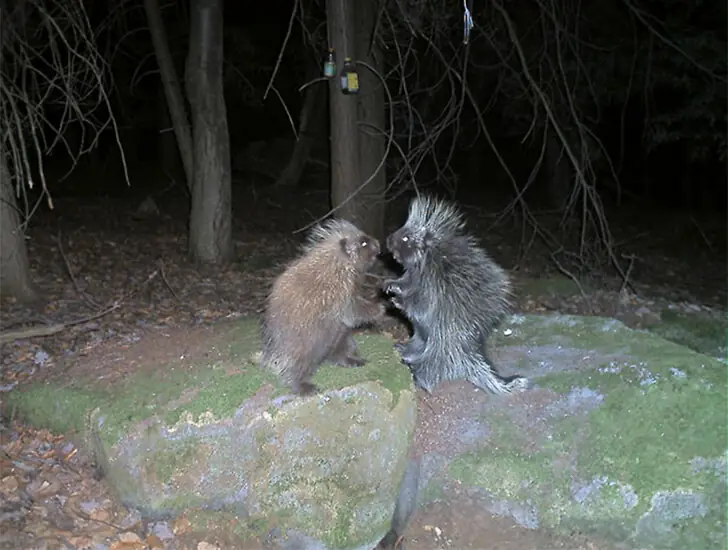
Porcupines take their mating seriously, and it is one of the primary reasons they fight each other. They may also fight each other over territory and access to food. But whenever a female makes a mating call, it attracts many males who fight for hours over the female.
Porcupines attack each other with their sharp quills and incisor teeth, but this particular battle looks more like a boxing match. These porcupine fights usually cause severe injury and can lead to death. Even the male who wins goes on to mate with up to 100 rival male quills stuck in its face.
A Tasty Camera
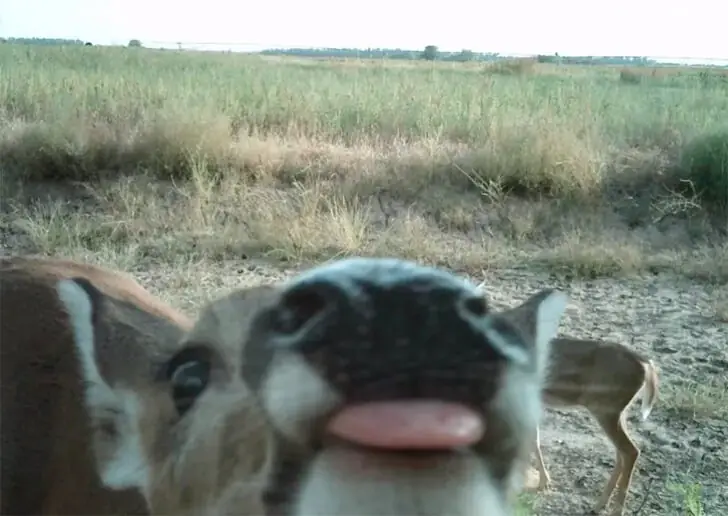
Deer like to lick things. They use this to bond and communicate with each other, but it also helps them interact with their environment. Licking surfaces such as rocks, tree trunks, and even human-made objects can help deer identify substances like minerals and salt that may be important for their survival.
Deer also have a sixth sense that helps them smell things better by tasting them. And they like to catch all the scents they can because the smell is very important to them. Sometimes they also lick their noses because a wet nose will catch a scent more than a dry one.
Battle of the Antlers
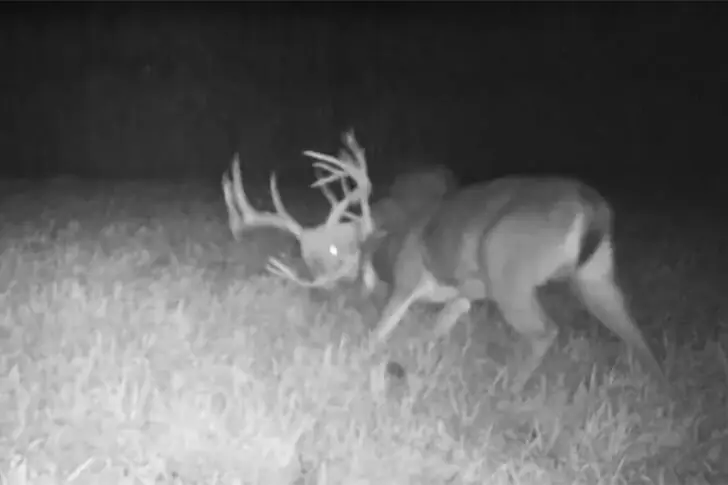
In the deer world, there’s something called the rut. The rut is used to describe the dramatic fights that male deer engage in during the breeding season to establish dominance and gain access to mating partners. That’s probably the fight between these two bucks, as their antlers look locked in combat.
Bucks use their antlers to push, shove and strike each other in a physical display of strength. The battle can be so intense that severe injuries and death can even occur, but they are typically not fatal. Sometimes, the struggle ends because one buck has had enough and concedes. It would be wild to watch it in person.
Resilient Buck
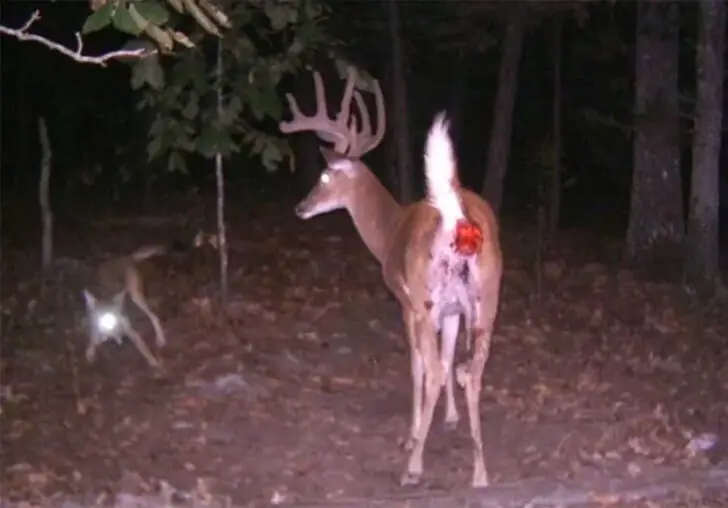
It looks like that’s a coyote having a showdown with a buck who isn’t giving up. The buck doesn’t look scared of the coyote despite it being one of its predators. When a deer is scared, it will press its tail flat, making only the brown fur visible. That’s not the case here, even though the buck has visible bite injuries.
Coyotes usually hunt alone or with others, but this one seems alone. Maybe that’s why this deer dares to fight back. It’s also possible that it’s too injured to run away and has a better chance of survival if it doesn’t turn its back on the coyote.
Ghost Girl?
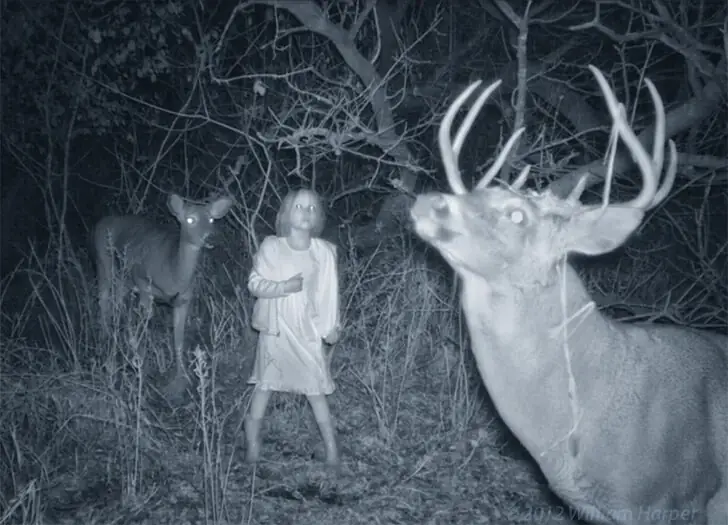
This image is highly unusual! What is the girl doing in the forest, completely dressed and in boots? Is she even aware that deer surround her? This picture has raised many questions on the internet, and some people are convinced the little girl in the photo is a ghost.
But it seems the photo is one of William Harper’s picture collections from trail devices fixed in the forests near his home. It might just be real, and the girl got lost. Deer may be wild animals, but they are generally docile and timid. They do not attack humans and may be curious about them if they are quiet.
On Your Feet, Deer.
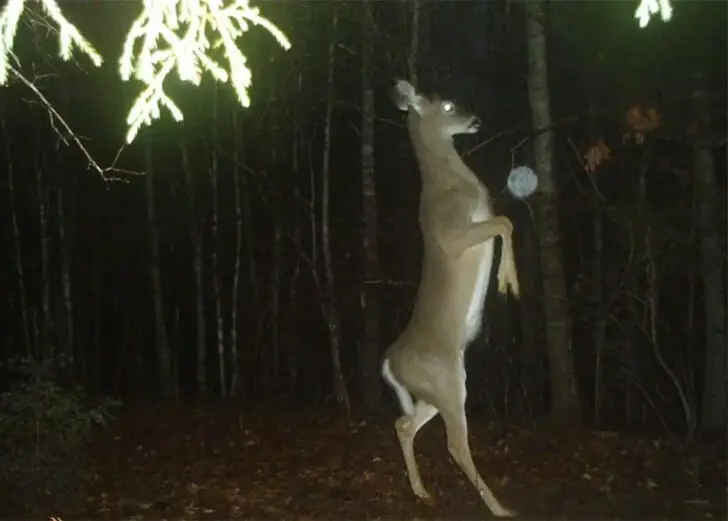
Although deer and humans have had more contact lately because of habitat loss, much about them still seems strange to people. For example, a video of deer standing on its two hind legs went viral because people were amazed, but it’s not weird for deer to do that.
The mammals can stand on their hind legs and reach bushes as high as 5 to 7 feet to eat fruits, leaves, and bark. And remember that deer shed their antlers yearly. So when they don’t have antlers to fight with, they stand on their hind legs and duel with their razor-sharp hooves.
Deer Blowing Raspberry
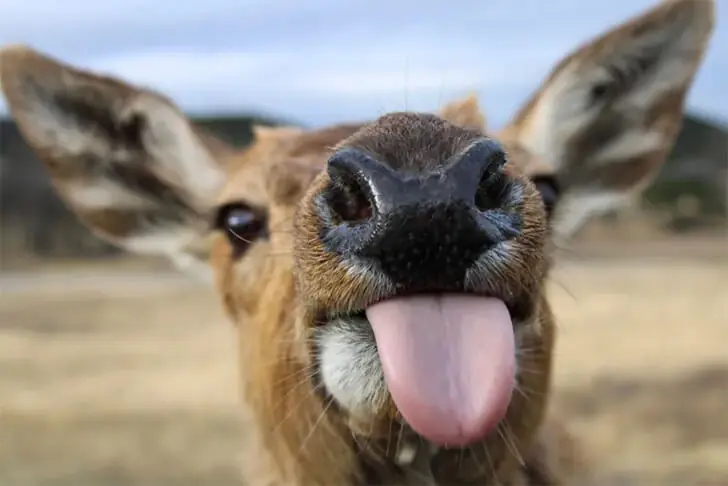
We know deer like to lick everything around them, but this one just looks like it’s taunting us. When we stick out our tongues at one another, it’s a sign that we’re mocking or taunting the other person, but it’s not the same for the deer—even if it looks like it.
A deer with its tongue out may be in danger. The deer disease known as Bluetongue or Epizootic Hemorrhagic Disease makes them have a fever. And if the infection is severe, they will also have their tongue out. This one in the picture looks funny, but we hope it’s not because of the disease.
Stealthy Wild Cat
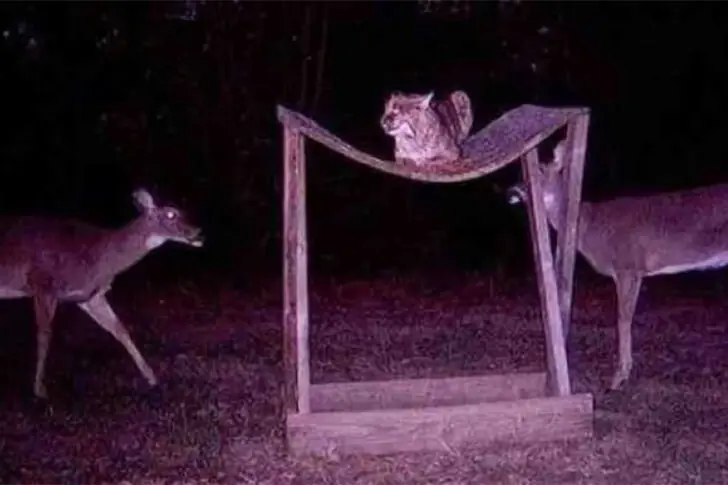
We’re unsure if the deer noticed the predator cat sitting atop this makeshift contraption. They are still moving in that direction as if there’s nothing to worry about. But predator felines eat almost anything, including deer. And it looks like this feline will treat itself to a feast tonight.
Deer have good eyesight, but their eyes are positioned on the sides of their head. While that gives them a wide field of view, it can make it difficult to see objects directly in front of them. They are also likely to struggle with seeing stationary objects, which is why they may have missed this cat.
Mama Bear Love
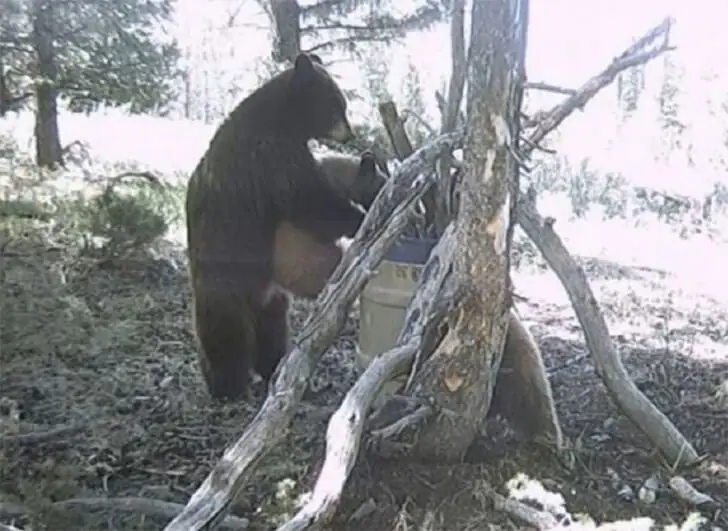
It’s so adorable seeing animals that care for their young. This looks like a human moment and makes us remember how our parents helped us with things we were incapable of doing when we were young. Bears, like other mammals, typically care for their young.
The female bears, known as sows, give birth to cubs during the winter while in hibernation and will fiercely protect them from any perceived threats. The sows can spend up to 2.5 years with their young, during which time one can see intimate moments like this. Here, mama bear is helping her cub to some yummy honey it wouldn’t reach otherwise.
Curious Wolves
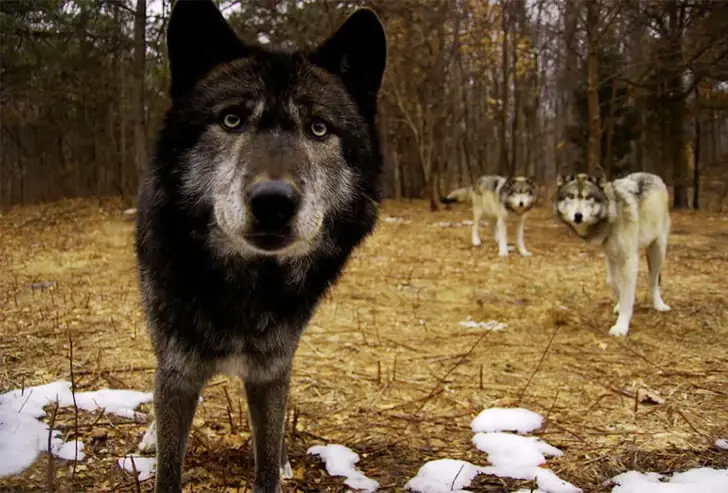
Sometimes, it’s hard to differentiate a wolf from a domestic dog by appearance alone. This wolf in our picture looks like a species of dog known as Wolfdog, but we doubt it would be found out in the wild like this. Still, a study has found that wolves, like dogs, can get attached to humans.
That being said, it’s best not to domesticate them. Wolves are not scared of too many things, but they are afraid of humans, and experts say it should remain that way. Wolves also have neophobia, a fear of anything new. But they are curious, which is why they are cautiously assessing this strange trail device.
I Come Bearing Fish
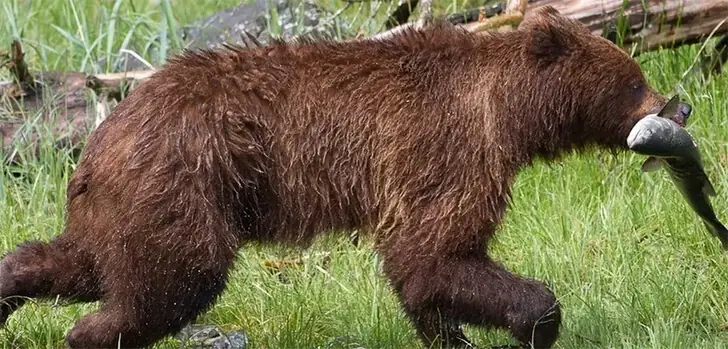
One thing associated with bears apart from honey is fish. Bears are known to be great anglers. And during periods of high salmon migration, a dominant male bear may consume over 30 fish in a day. Part of what makes them suitable is that they are good swimmers.
Despite all their thick fur, brown bears can easily stay afloat. But interestingly, even though bears are excellent at fishing, fish is not the food they eat the most. Some of their favorites are fruits, nuts, and honey, of course. And sometimes, bears eat insects too. That’s pretty remarkable for a carnivorous species.
New Mating Styles
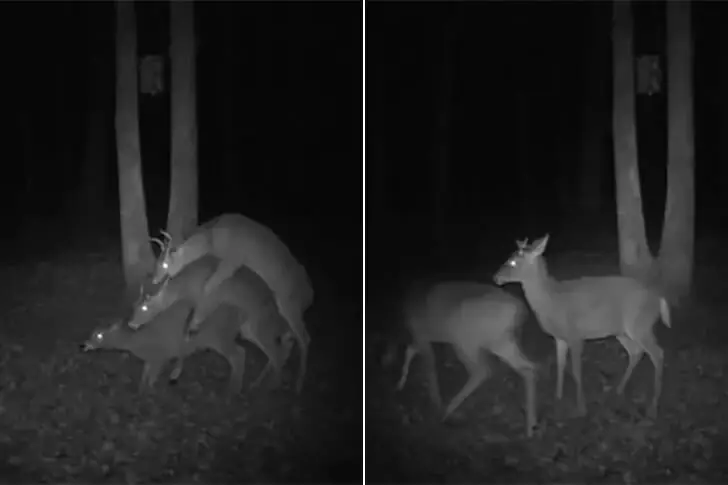
In this picture, a few deer can be seen piled on each other. It is unclear why they are stacked this way, but it is unusual to see something like this. Usually, deer mate after the buck chases the doe and eventually catches her. They go a small distance together and find a spot to copulate.
But to see another trying to climb the buck already mating is weird. Perhaps it needs to wait its turn or find another doe. They usually fight it out first before the winner gets access to receptive females. So we wonder if this scenario is part of the fight.
Bobcat VS Coyote
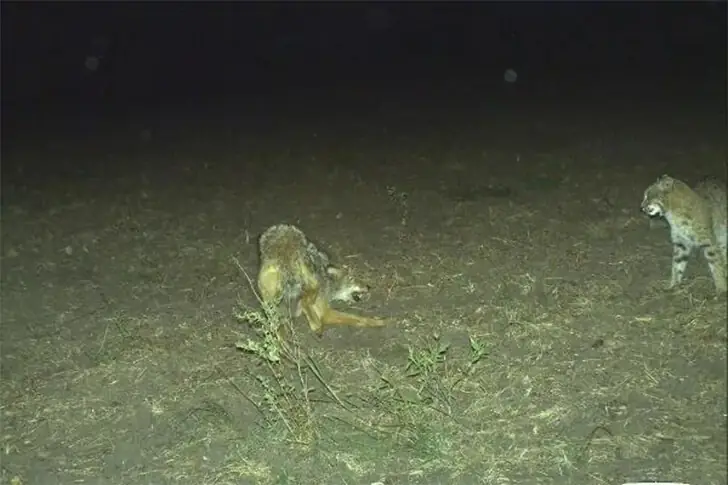
These are the battles we imagine in the wild. Perhaps there should be a tournament to reassess which animal is the king of the jungle. Unfortunately, we don’t know the eventual outcome of this fight between a coyote and a bobcat. But we have an idea who might have won.
AZ Animals says a coyote would likely emerge victorious in a battle against a bobcat due to its larger size and greater strength. Its longer teeth and stronger bite would give it an advantage in close-quarter attacks. Still, it is worth noting that a bobcat can also win by using its teeth and claws to harm the coyote.
Party Animals
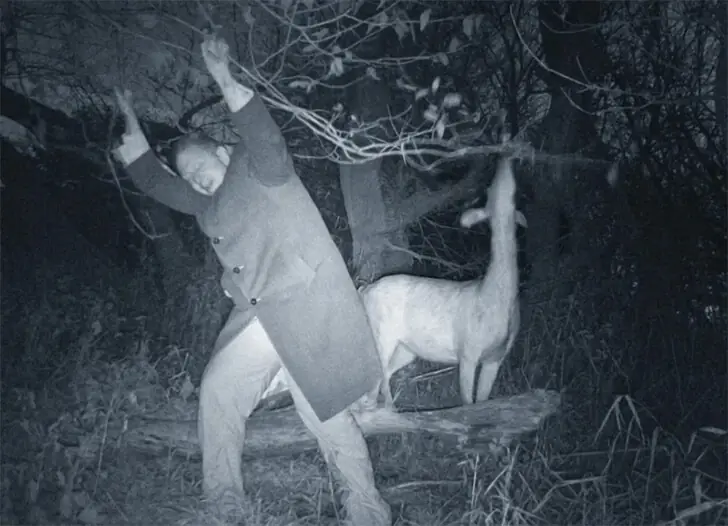
Trail cameras capture wildlife images, but occasionally we see them capture humans in the frame, resulting in amusing pictures like this one. However, some are scary and weird. This photo depicts a seemingly intoxicated man striking a pose with his arms raised while a deer in the background also poses for the picture.
Deer are known for their strong attachment to their habitats, which can lead to conflicts with humans as development encroaches on their territory. As people build homes and farms in areas where deer live, the animals may struggle to adapt and find new homes, despite the disruption to their lives.
Buck Taken Down by Coyotes
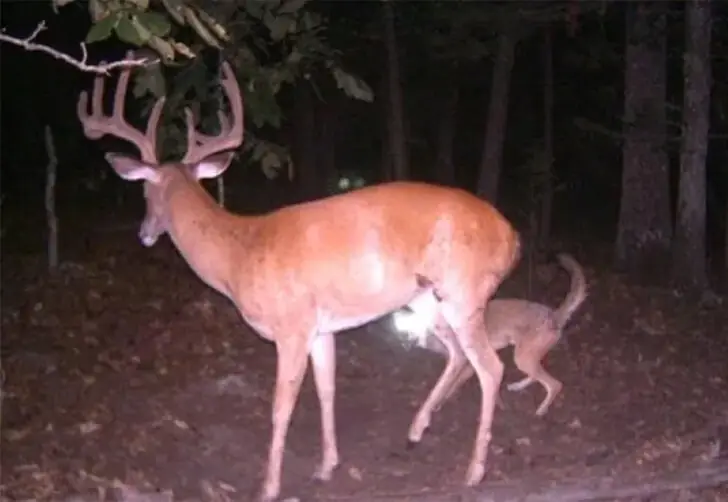
This picture depicts a battle between a buck and several coyotes. Although just one of them is visible in this picture, more attacked this buck. Coyotes can hunt alone or in loose associations with other coyotes. Some of them are known to hunt in small groups, typically consisting of family members.
Unfortunately for the buck, the coyotes eventually killed it. Its dead carcass was even food for vultures the following day. Coyotes contribute significantly to deer mortality. They prey mainly on the fawns in the earliest months of their lives and primarily only attack the adults as a pack because of their size.
A Lonely Celebration
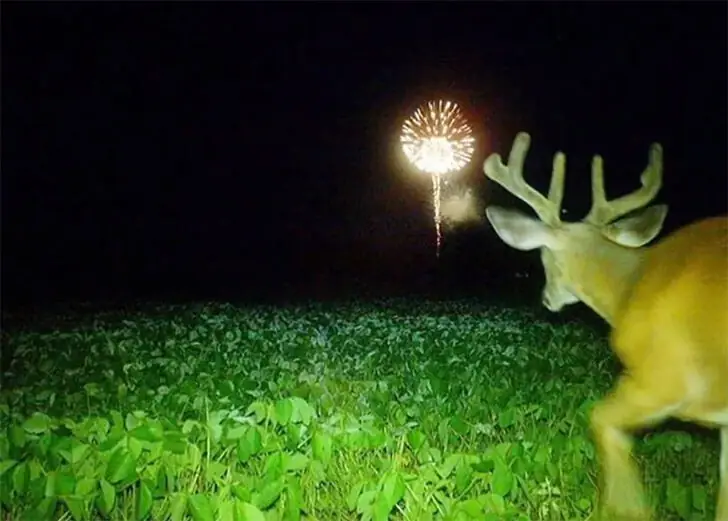
This buck has stumbled upon a fireworks display. The sudden noise and lights may catch him off guard, but maybe he’s just as excited as we are when we see fireworks. People use them for various reasons, including celebrating holidays such as New Year’s Eve and Independence Day. Maybe the deer wanted to join in on the celebrations.
Deer have good eyesight and can notice fireworks from far away. But they may not perceive it the same way we do because they have poor color vision. Bright colors may not be noticeable to them. They are more sensitive to blue and green.
The Mountain Lion’s Favorite
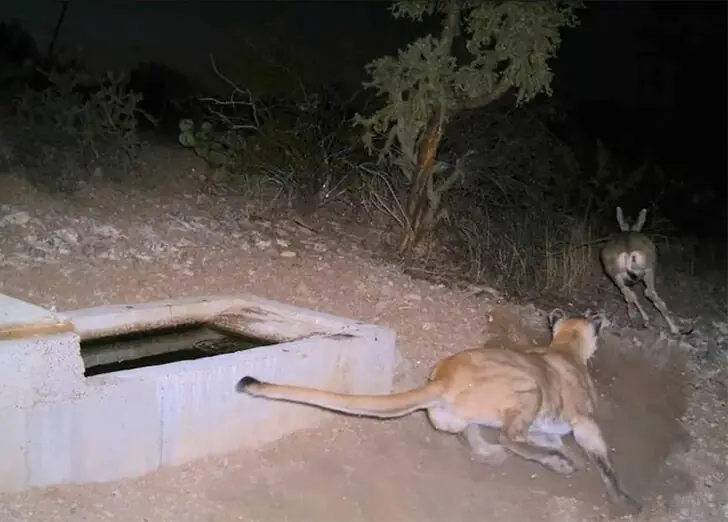
It’s the end of the rope for a deer that comes across a mountain lion. Mountain lions usually prey on deer as their primary source of food. Although we can’t see their movements since it’s a picture, we can still tell a high-speed chase is going on. Interestingly, deers are pretty fast, even the larger ones. They run at speeds higher than that of the mountain lion.
But the lion still catches and kills it despite being slower. That’s because while the deer can run faster, it can only do so for a short while. Mountain lions have both endurance and strength, so they win.